Turning a broad goal into something a person can act on
Most goals begin in language that is too loose to guide daily behavior. "Get healthier," "be more organized," or "make time for family" may describe a real intention, but none of them tells a person what to do next.
Apreesh set out to close that gap. The product combines self-assessment, goal planning, practical tasks, selected supporters, and group challenges in one mobile experience. A user can see which parts of life need attention, choose a goal in context, break it down, and keep a record of the work after it is finished.
Priority Soft helped turn that model into a working Flutter application. The challenge was to connect several motivational ideas without creating a product that felt like a collection of unrelated features. Reflection had to lead to action. Social support had to feel useful without making private goals public. Progress had to be visible without reducing every goal to a score.
Starting with the whole picture
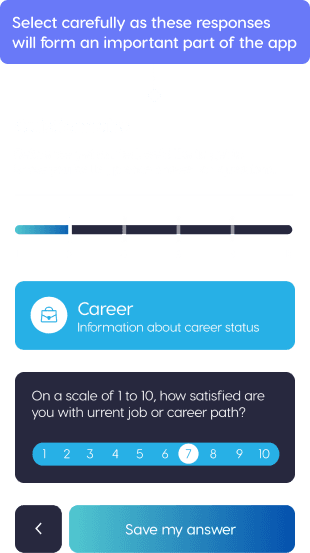
The Wheel of Life gives Apreesh its organizing idea. Instead of asking someone to create a goal in an empty form, the product begins with a short questionnaire across different areas of life. The answers create a visual picture of where the user feels strong and where more attention may be useful.
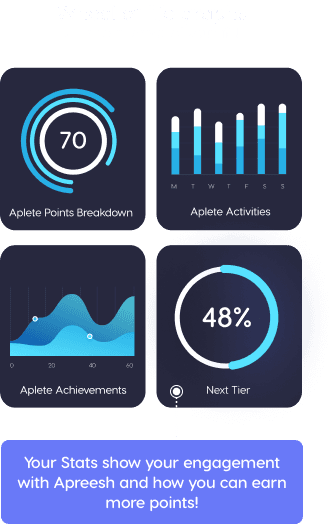
That view gives the next decision some context. A person can choose an area, create a focused goal, and later see how completed work changes the broader picture. The wheel is both an entry point and a reason to return.
Priority Soft refined the questionnaire and graph for a phone screen. Labels, chart behavior, navigation, and the transition into goal creation work together so the wheel leads into a useful next step.
Building a goal that can survive Monday morning
Once a user chooses an area, Apreesh helps turn the intention into a concrete goal. The product then breaks that goal into tasks that can be completed and reviewed separately.
The goal experience continues after setup. A user can create a goal, edit it as circumstances change, update task status, review progress, and move finished work into an archive. The app keeps the current action close while preserving why the goal was created.
Task status is quick to change, the relationship between a goal and its tasks remains visible, and progress updates without adding noise. Priority Soft built these interactions in testable slices while the wider application was still taking shape.
Accountability without turning life into a public feed
Apreesh lets users invite selected supporters to a goal. A supporter can see its progress and provide accountability without gaining access to everything else in the account.
Personal goals may involve health, relationships, work, or other parts of life that a user does not want to broadcast. Each goal has its own support circle instead of appearing in a general activity feed.
Priority Soft built the invitation and acceptance flow, connected supporters to selected goals, and handled the states on both sides of the relationship. Support is part of goal planning, not a general engagement feed.
Adding structure through challenges
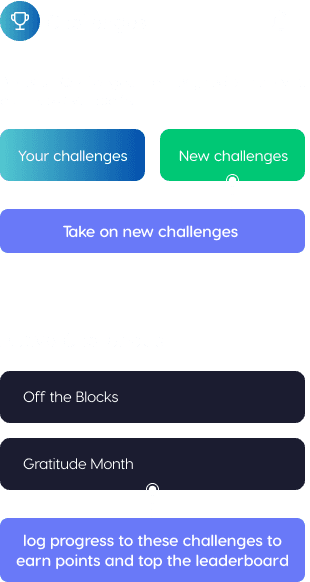
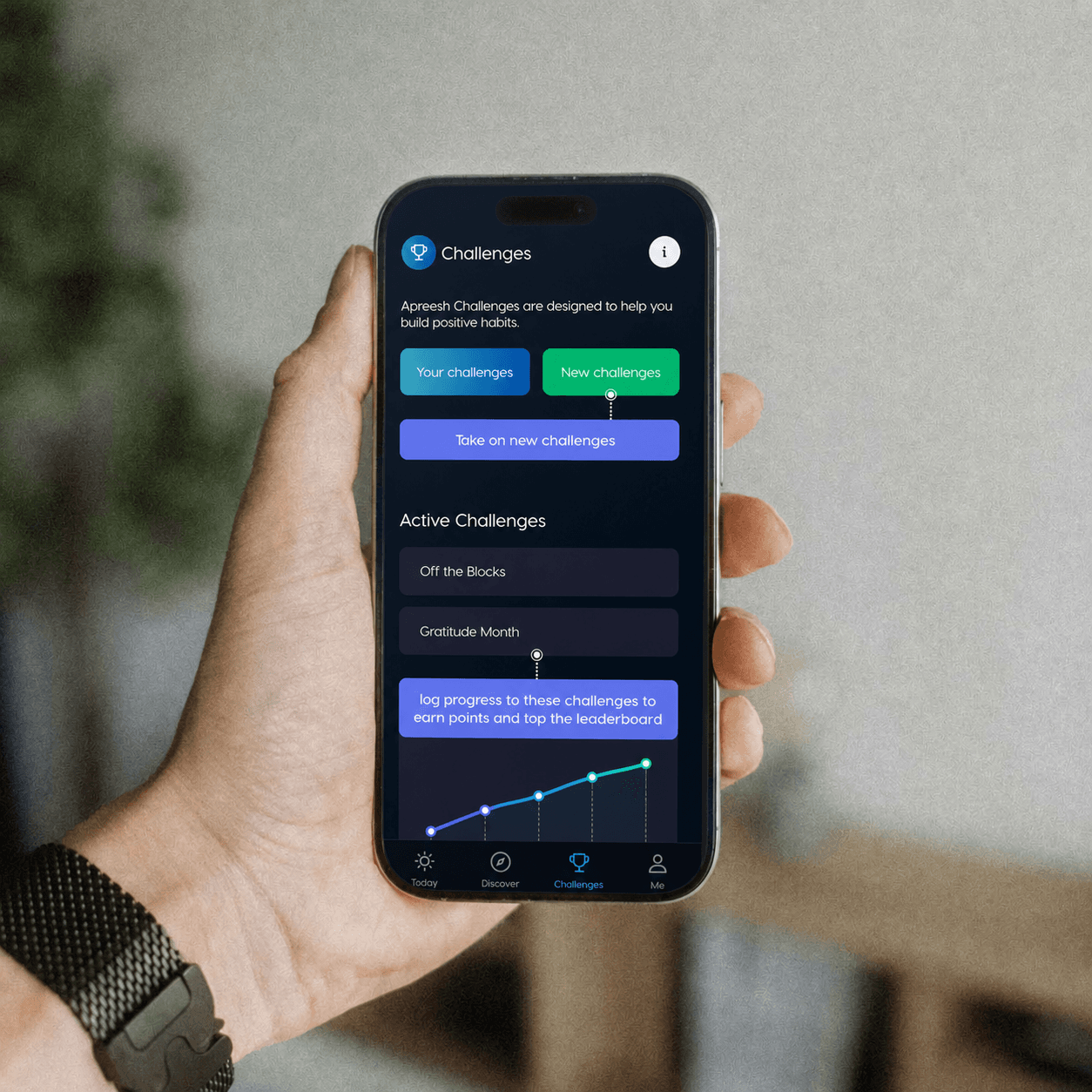
Individual goals are only one side of the product. Apreesh also supports structured challenges where people work toward a shared format and can compare progress with others.
Challenges have their own rhythm. Users need to understand what is active, what they have joined, how progress is measured, and where they sit within the group. We kept that experience separate from private goal support while making both available from the same application.
Leaderboards provide a clear view of group progress, but the product still keeps the user's own tasks and completion history central. That balance allows challenges to add energy without replacing the deeper goal-setting model.
Preserving completed work
Finished goals move into an archive. Written entries, images, and video preserve what was completed and how the user got there.
Priority Soft built media-aware archive screens that support close review without making the main goal experience heavy. Active work and completed work have different needs, so the application treats them as related but distinct parts of the process.
Users can review older goals without cluttering the active workspace. The app holds both sides of the process: what someone is working on now and what they have already followed through on.
A practical mobile architecture
Apreesh is built with Flutter and Dart for iOS and Android. BLoC-based state management keeps authentication, goals, tasks, supporters, challenges, subscriptions, notifications, and archives in defined feature areas rather than mixing application logic into the screens.
Firebase supports identity, analytics, messaging, storage, and server-side functions. Media files live in managed storage, while notifications bring users back to relevant goal or challenge activity. Stripe supports the subscription layer at a high level.
The technical structure mirrors the product structure. Goals, challenges, supporters, and archives each have their own repositories and state, but they can meet in the home experience without becoming tightly coupled. That makes future product changes easier to contain.
What Priority Soft brought to the product
Priority Soft contributed product judgment as well as engineering. We worked through how the wheel should lead into goals, how vague intentions could become specific tasks, where supporters belonged, how challenges should differ from private goals, and what completed work should look like later.
Those decisions shaped the application more than any individual widget. Our team kept the coaching model, the interface, and the technical structure moving together. The client could review real product behavior early, which made the conversations concrete and helped expose awkward transitions before they spread through the app.
The engineering structure reflects those decisions. Flutter provides the shared mobile foundation, while the feature boundaries keep the connected user loops manageable.
The outcome
Apreesh now carries a user from reflection into action. They can assess different areas of life, choose a goal, define tasks, invite supporters, join a broader challenge, and keep a record after completing the work.
Priority Soft turned a multi-part coaching concept into a product where each piece has a clear role. The wheel provides context. Goals and tasks create action. Supporters add accountability. Challenges introduce group momentum. The archive gives completed work somewhere worth returning to.