AI can classify, extract, recommend, generate, or transform at a speed that changes what a product can offer. It can also produce plausible mistakes, unpredictable costs, slow responses, and behavior that is difficult to support if the surrounding workflow is vague.
We start by defining the task, the available context, the cost of a wrong result, and what a person should review or correct. The team then has a specific use case to test.
We choose a narrow first job with visible value
A useful first AI feature has a clear input, a recognizable output, and existing work it can reduce. We collect representative examples, define "good enough," and identify cases that require rejection or human review. A working prototype tests the riskiest assumption before we build the product around it.
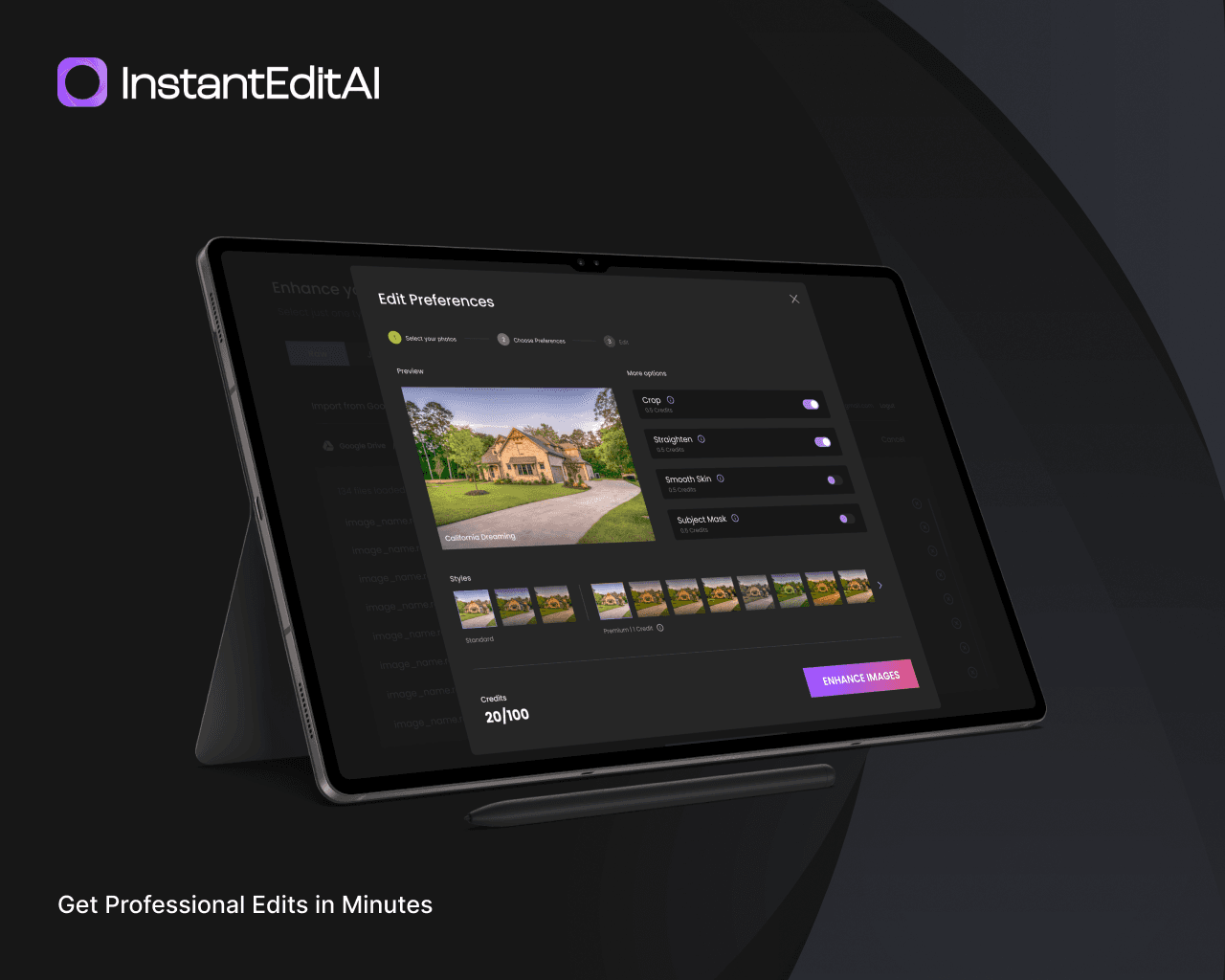
For 4SightRX, AI extracts information inside a clinical reconciliation workflow, while clinical staff make the professional decision. InstantEdit uses automation to prepare and edit large sets of photographs through a repeatable process. In both products, AI supports a complete user job.
Deterministic software remains in charge
Application code controls authentication, permissions, billing, workflow state, validation, and final business rules. AI can suggest, explain, classify, or prepare information. It cannot change an important record without the checks that the workflow requires.
We use structured outputs, schemas, confidence or validation checks, and human confirmation according to risk. Source material can remain visible so a reviewer understands where an answer came from. When a provider fails or produces an unusable result, the product presents a recoverable state rather than pretending the operation succeeded.
Evaluation continues beyond the demo set
We create a representative evaluation set from the product domain, including awkward and adversarial examples, then track the dimensions that matter: usefulness, factual consistency, format compliance, latency, and cost. Provider and prompt changes are checked against those examples instead of judged from a handful of conversational tests.
We monitor drift, repeated failures, fallback frequency, and the points where users correct the system. Those corrections can improve the evaluation set without exposing private customer data. The team can improve the feature and check each change for regressions.
We are willing to stop an AI direction
Discovery may show that a rule, search tool, or human-assisted workflow works better than AI. During InstantEdit research, video automation was slower and less predictable than the photography workflow and still required substantial review. We recommended pausing it instead of selling an experiment as a dependable feature.
That decision saved budget and protected customer trust. For suitable AI work, we plan for provider changes, background processing, usage controls, privacy, and visible costs. For other work, we use a simpler technical approach.