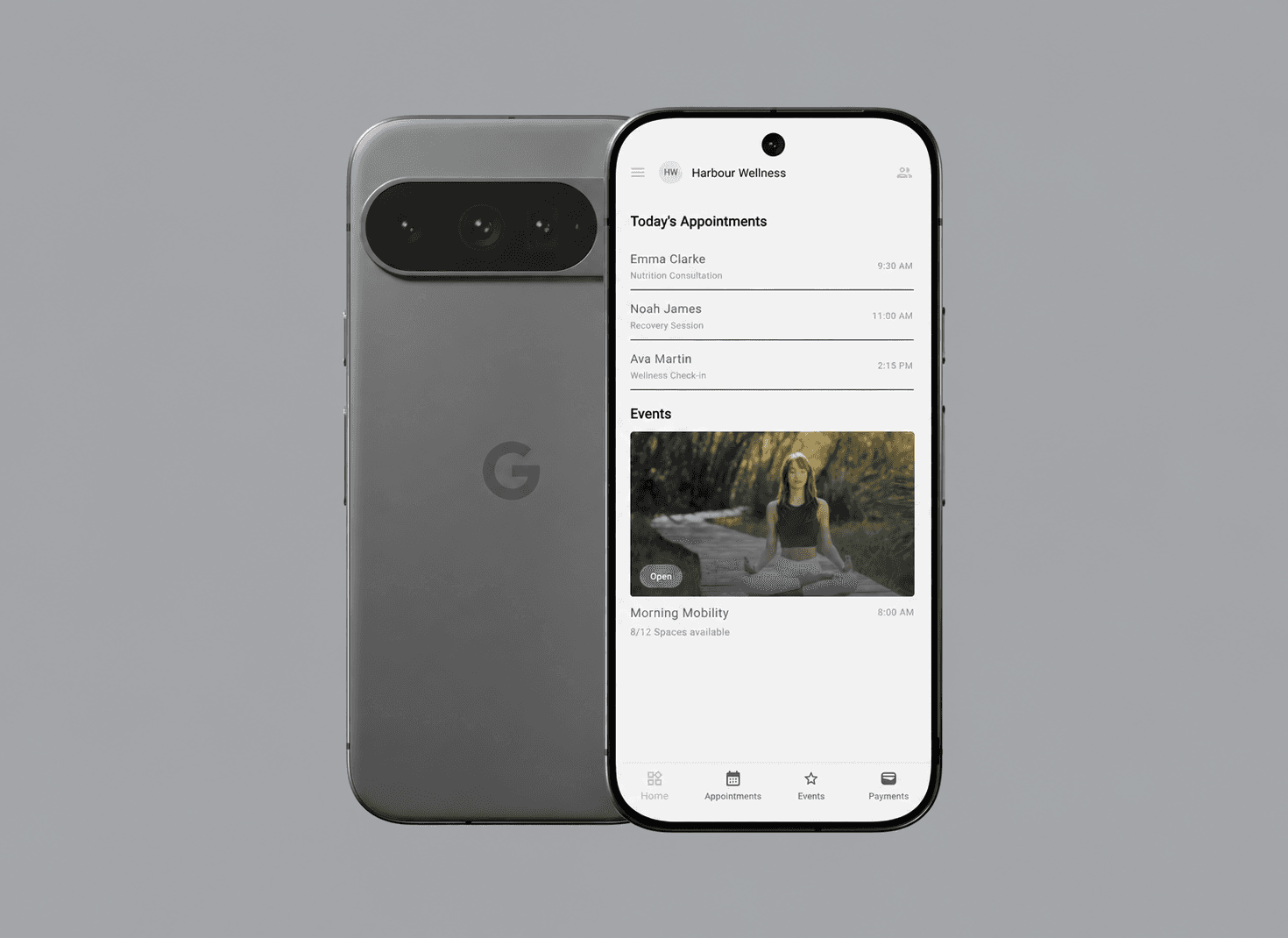
A mobile application runs on different devices, loses its connection, receives interruptions, asks for permissions, handles upgrades, and passes through two store reviews before customers can use it.
We plan for all of that from the start. The same delivery plan covers product design, application architecture, backend behavior, analytics, payments, notifications, release signing, and store requirements.
We design around the moments people reach for a phone
A mobile app often needs a narrower workflow than the desktop system behind it. A field technician may need today’s jobs and an offline camera. A coach may need a session plan beside the pitch. We find those moments and give the main action the shortest path.
Our prototypes include loading, empty, permission, error, and recovery states as well as the ideal path. Navigation, keyboard behavior, safe areas, gestures, and accessibility are reviewed at device scale. This keeps the application from feeling like a responsive website placed inside a phone frame.
Cross-platform where it helps, native where it matters
Flutter and React Native let many products share logic and release features to iOS and Android together. We use that leverage when the product benefits from it, while accounting for platform-specific behavior around notifications, purchases, background work, files, Bluetooth, widgets, sign-in, and privacy permissions.
We choose the approach based on the current team, device capabilities, interface demands, and maintenance needs. We recommend a native module or Swift implementation when it gives the product a better result. The team needs a maintainable app with predictable releases, even if that means sharing less code.
The backend and mobile release move together
Authentication, synchronization, media, payments, and notification state have to agree across the application and its services. We define that contract early, test degraded network conditions, and avoid assuming every request completes while the screen remains open. For field products such as Ken’s Gutters, offline behavior is a central product feature. For connected consumer products, account state and subscriptions must remain consistent across devices and stores.
We also establish build signing, test distribution, and environment configuration early. One Trustpilot reviewer highlighted that our team configured synchronized iOS and Android delivery, integrated RevenueCat, and established Android build infrastructure in a single day when the project needed it. That speed came from treating release engineering as normal product work.
We stay through review and the first real users
Store descriptions, privacy declarations, reviewer access, screenshots, subscription configuration, and account-deletion requirements can block an otherwise finished application. We prepare the submission, respond to review questions, and make necessary changes instead of handing the client an archive and a checklist.
After release, crash reports, product analytics, and user feedback show where users struggle. We separate defects from product improvements and keep both visible on the roadmap. The team leaves with a repeatable release process for future versions.