Putting the local music scene on one map
Information about local live music is scattered across venue listings, social posts, posters, and conversations. Fans may hear about a band after the performance. An emerging artist can play a good set and still struggle to reach people beyond the room. Venues may know the sound they want but lack a direct way to find the right act.
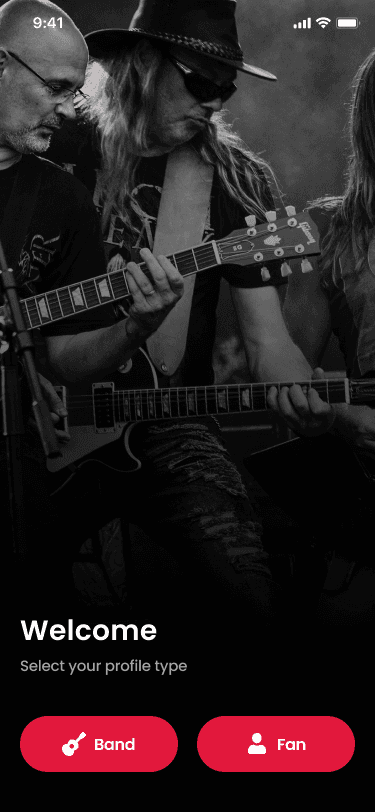
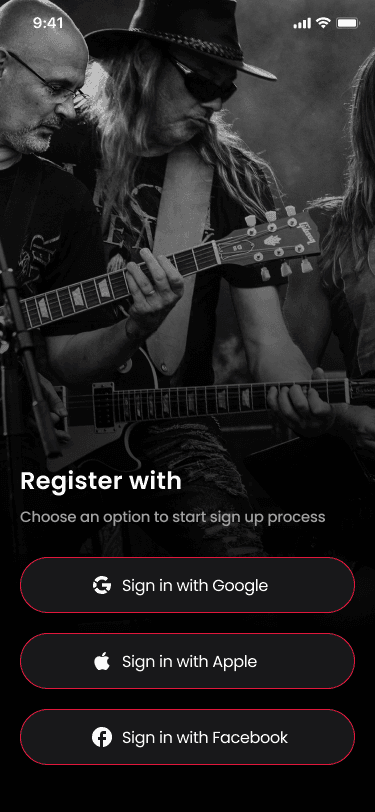
Band Hunter brings those people into one mobile product. Fans can explore performers and upcoming shows by location and taste. Bands can present their work, publish performances, and build a following. Venues can discover artists and begin the process of arranging an event.
Priority Soft helped turn that broad marketplace idea into a product with clear roles and a shared center. Our work spanned discovery, user experience, mobile development, backend engineering, and the many product decisions required when one action must make sense to several different kinds of user.
Designing for value before the network is crowded
A discovery platform improves as artists, venues, and events join it. Band Hunter still needed to help its first users before a local scene had broad coverage.
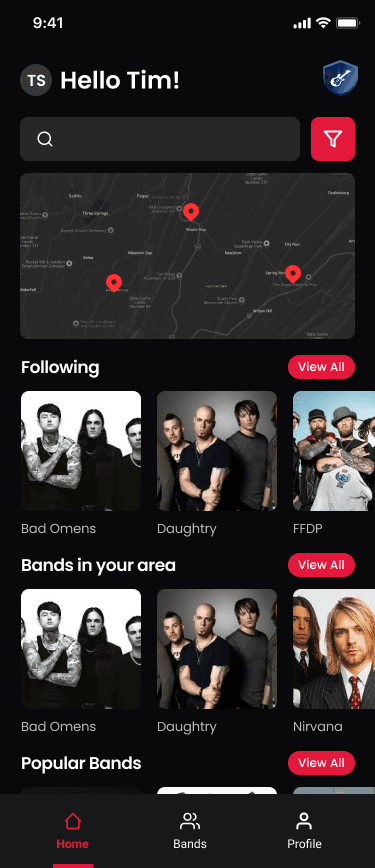
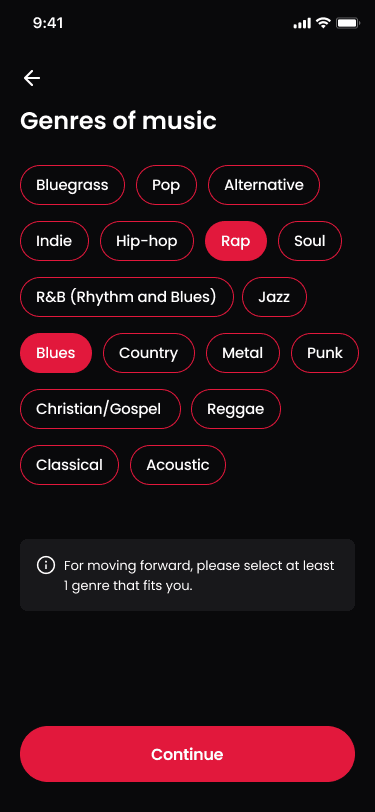
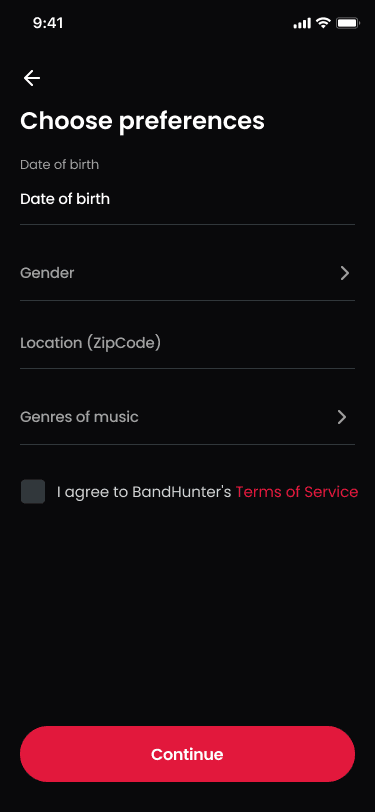
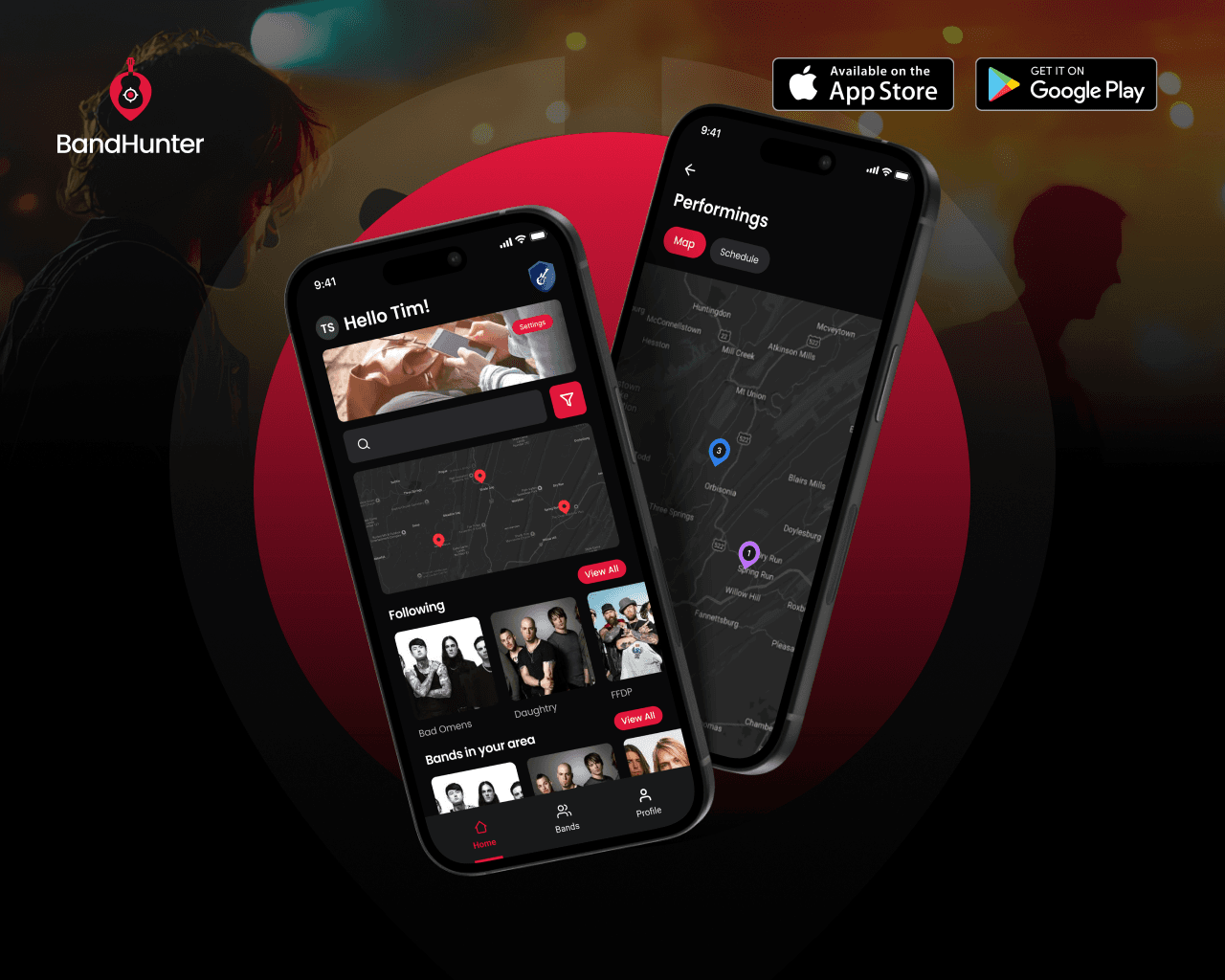
We focused on features that work while the community grows. Fans set preferred genres and a search radius, then explore followed bands, popular artists, and nearby performances. They can search by band name, genre, place, or date.
The home experience does not depend on an endless social feed. It gives people a practical view of what they can listen to and where they can go. Following an artist makes future discovery more relevant, while shareable profiles allow bands and fans to bring the product into conversations already happening elsewhere.
Band Hunter could support focused searches, casual browsing, and profile sharing before the catalogue became large.
A discovery experience built around place
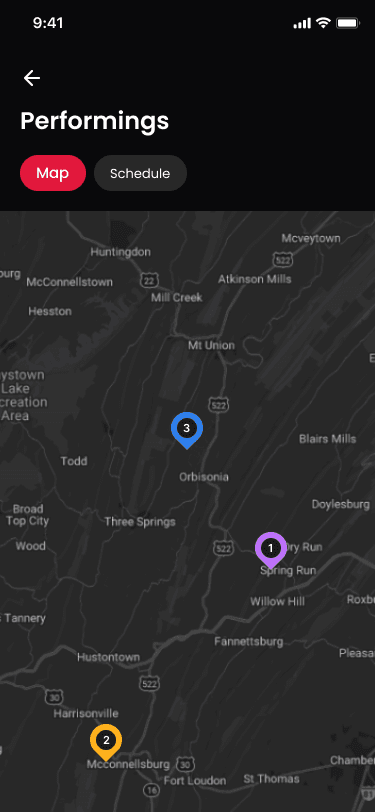
Live performance is tied to place, so location could not be treated as a minor filter. Priority Soft designed the discovery experience around a map and nearby activity while keeping list-based browsing available for people who prefer to scan and compare.
Users can adjust the area they want to explore and narrow results by genre or performance date. The interface makes a distinction between a band based nearby and a band performing nearby; for a fan deciding what to do, the upcoming show is often the more useful piece of information.
From a result, the user can move into a band profile and understand the artist without hunting through separate sources. A profile brings together the band's story, imagery, musical identity, and upcoming schedule. Following and sharing are available at the point where interest is highest.
We paid close attention to the movement between map, search results, and profiles. Those transitions determine whether location discovery feels natural or like a database with pins on it. The finished flow keeps the sense of browsing a local scene while making the underlying information easy to act on.
A working profile for each band
Bands can introduce themselves, add media, publish performance information, and give new listeners one place to see what comes next.
Priority Soft gave artists control over their public profiles. A band can update its information, share the profile, and use a QR code at a performance or on promotional material. Followers receive relevant updates about new dates.
Promotion tools sit beside profile management. Artists can see the public result as they update information and share it with listeners.
Media carries the artist's identity, while upcoming and past appearances receive different treatment. Bands can update profile information from a phone before or after a performance.
Connecting discovery to live opportunities
Band Hunter also gives venues and organizers a structured route from browsing to planning a performance. They can review artist profiles, understand the band's style and availability, and begin a conversation around an event from within the platform.
The product supports event creation and quote requests at a high level, but the important design work was the relationship between them. A venue should not have to re-enter the same context at each step, and a band should be able to understand what opportunity is being discussed. We connected the public discovery information with the private coordination flow so both sides begin from the same event.
The same profile helps fans decide whom to follow and venues decide whom to contact. Artists maintain one identity for listeners and potential bookings.
Priority Soft kept the experience appropriate to each role. Fans are not confronted with operational controls, while artists and venues receive the tools relevant to their side of a performance. Shared information stays consistent even when the actions around it change.
Following the relationship after discovery
Good discovery should have a memory. Once a fan finds a band they like, Band Hunter can keep that connection useful through follows, performance notifications, profile sharing, and ways to show support.
Notifications bring fans back for an update from a followed artist or an approaching performance. Preferences let users choose which supported updates they receive.
Tipping and congratulatory interactions let fans respond to performers after discovery. Reporting tools provide an in-app route for inappropriate profiles or activity.
Follows, notifications, and profile history preserve the connection after a search or night out. Fans can find the artist again, and bands can keep interested listeners informed.
One product, several distinct experiences
Band Hunter is built as a React Native application, giving fans, artists, and venues a consistent mobile experience across iOS and Android. A TypeScript and NestJS service layer supports the shared product information and role-specific workflows. PostgreSQL provides the structured data foundation, while Firebase services support identity, media, and notifications.
The architecture is organized around the product's main concepts: people, bands, venues, performances, media, and communication. Background processing supports work that should not interrupt the mobile experience, and a dedicated administration layer gives the platform a practical way to oversee public content.
This public architecture stays at a high level. A performance published by a band can appear in discovery, reach followers, and provide a venue with useful context. Shared data supports those experiences while permissions keep each role's interface separate.
Product decisions across the marketplace
Priority Soft resolved product choices that affected design and engineering. We defined nearby search, the signals behind popular bands, notification timing, and the boundary between public profiles and artist controls.
We reviewed search, map interactions, profile sharing, event information, venue actions, and support tools as connected parts of one product. A decision for one role had to preserve the workflows of the others.
Our team created a visual and interaction system for maps, artist galleries, event forms, and venue workflows. Each surface keeps its own layout while sharing navigation, state, and feedback patterns.
The outcome
Band Hunter became a multi-sided mobile product with a clear purpose for every participant. Fans can find live performers through location and taste, learn about a band, follow it, and stay aware of upcoming shows. Artists can build a credible public presence and turn attention into an ongoing audience. Venues can discover performers and move toward an event without starting again in another system.
Priority Soft connected live-music discovery with artist profiles, venue workflows, follows, and events. Bands, fans, and venues share the same local information while using tools built for their roles.