Giving a personal goal real weight
Many goal trackers are easy to ignore. A user writes down an intention, checks in for a few days, and then stops opening the app. Bank on It makes the commitment visible, measurable, and harder to abandon.
The mobile app lets a person define a goal, choose a way to measure progress, invite an accountability partner, and select a charity. If the user fails to follow through, the financial commitment adds a consequence beyond a missed streak.
Priority Soft helped turn that behavior model into a clear cross-platform experience. The work connected goal creation, progress records, supporting images, partner involvement, and payment-related states without allowing the financial mechanism to overwhelm the human reason for using the product.
Turning intention into a defined commitment
A title alone does not define a useful goal. Bank on It asks what the user wants to change, when the commitment begins and ends, how they will record success, and who will help keep them accountable.
The same structure supports a fitness habit, an unwanted behavior, or a recurring activity. Each commitment has its own description, timeframe, check-in questions, and progress history. Users do not have to force every goal into one generic counter.
Priority Soft turned these choices into a guided setup. Each screen asks for one decision and explains its effect. Once the goal appears on the home screen, the user knows what they promised and how the app will record progress.
A progress chart only helps when its data has a consistent meaning. We used the choices from setup to define what the reporting screens show.
A home screen that shows where things stand
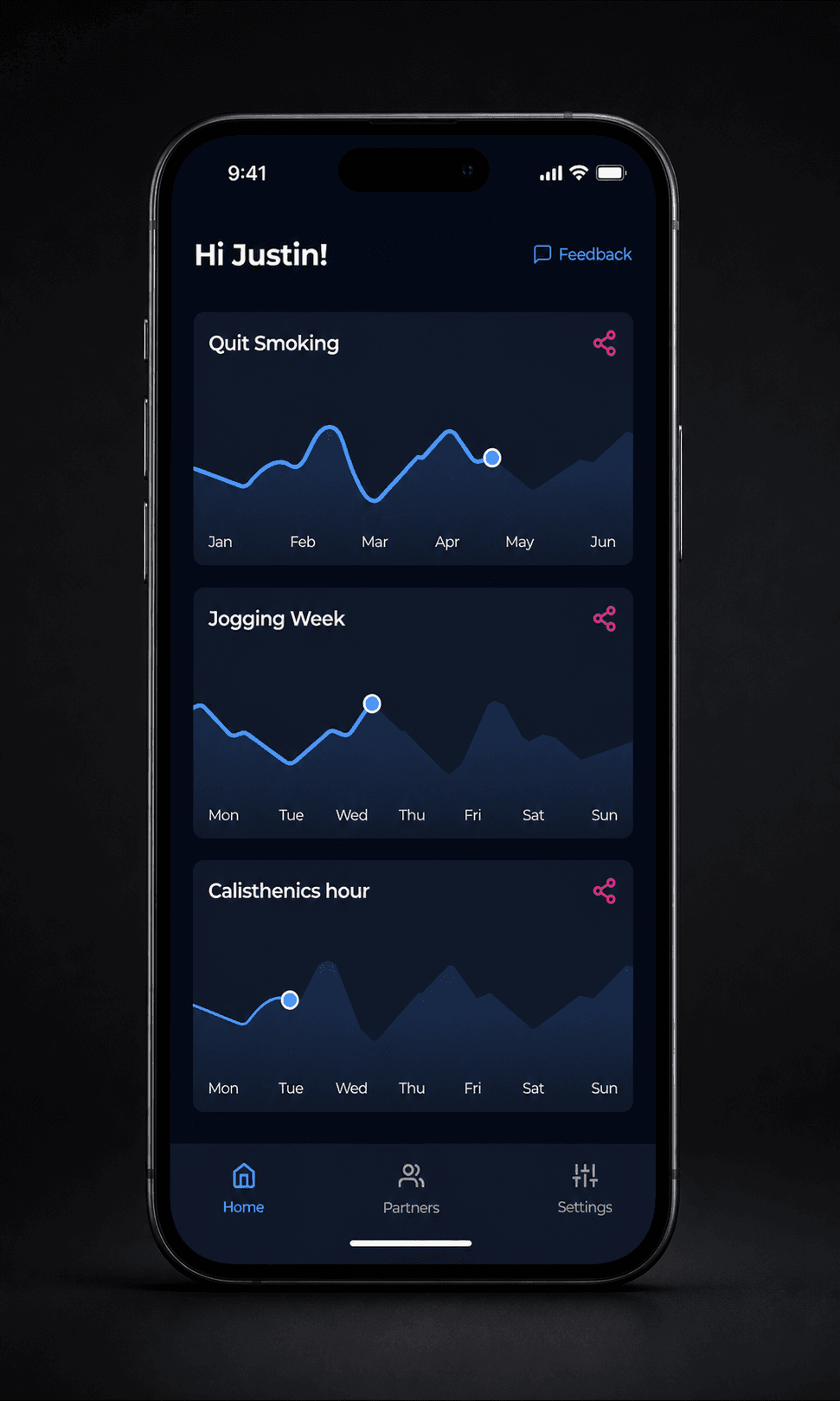
Bank on It supports several active goals at once. The home screen gives each one a distinct card with its current progress, relevant timeframe, and a direct route into more detail. Users can scan the page and understand which commitments need attention without opening each record.
The interface uses a calm visual treatment. Progress graphs show movement over time, while the strongest actions appear inside each goal. The dashboard remains easy to scan when its cards cover different parts of life.
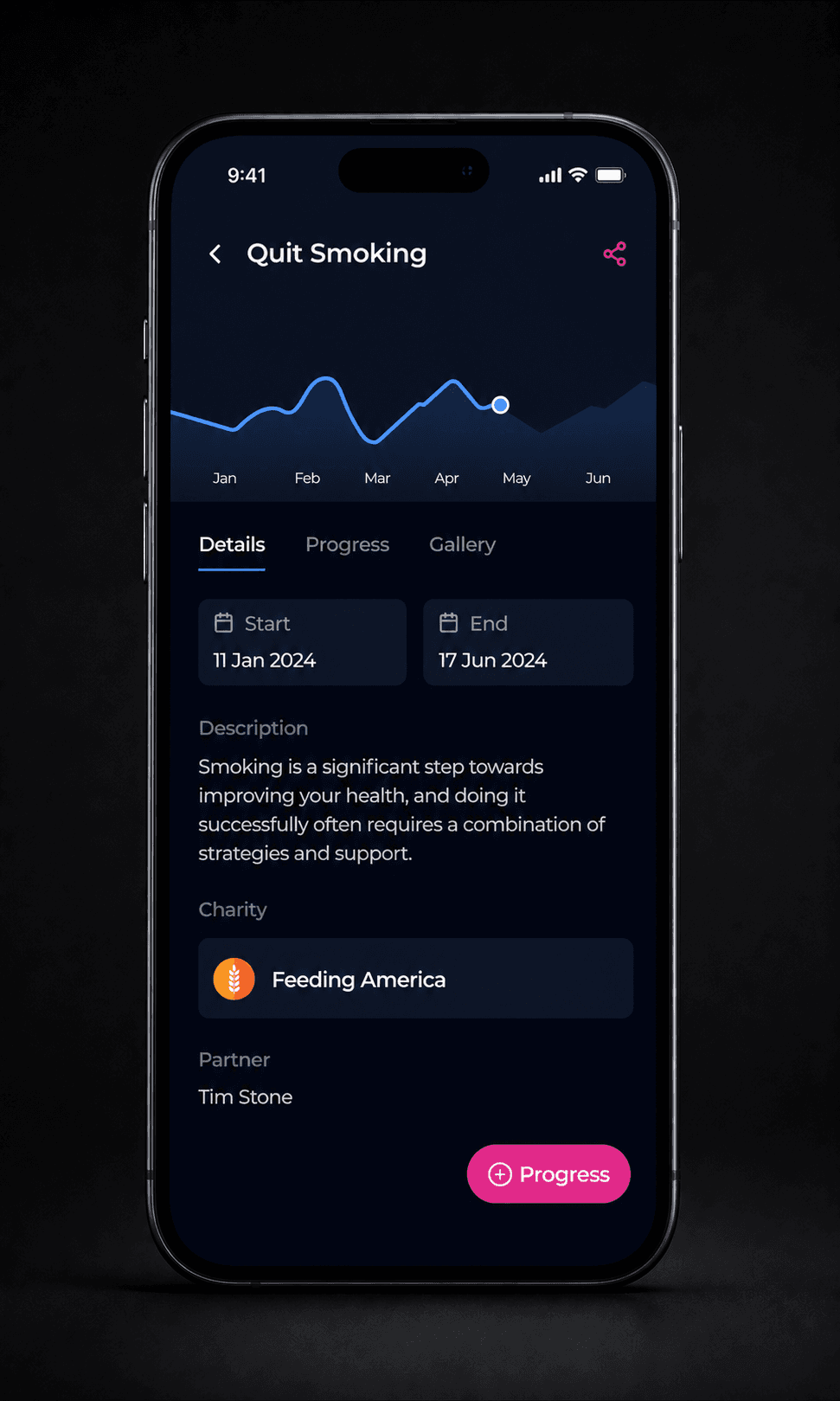
Users can share from the goal card or detail view. Bank on It keeps that sharing private and tied to personal accountability, so each user decides who can see a commitment and its progress.
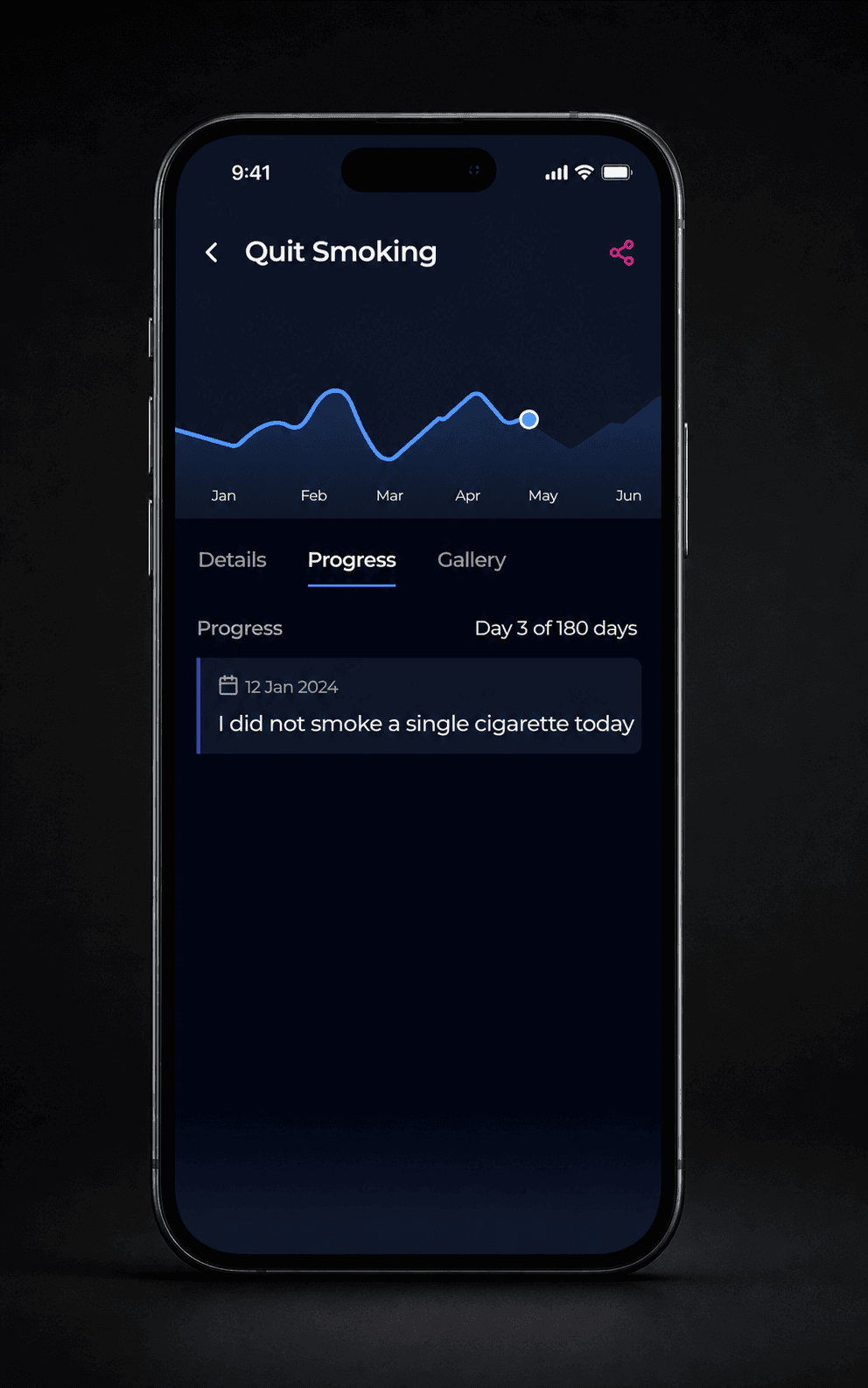
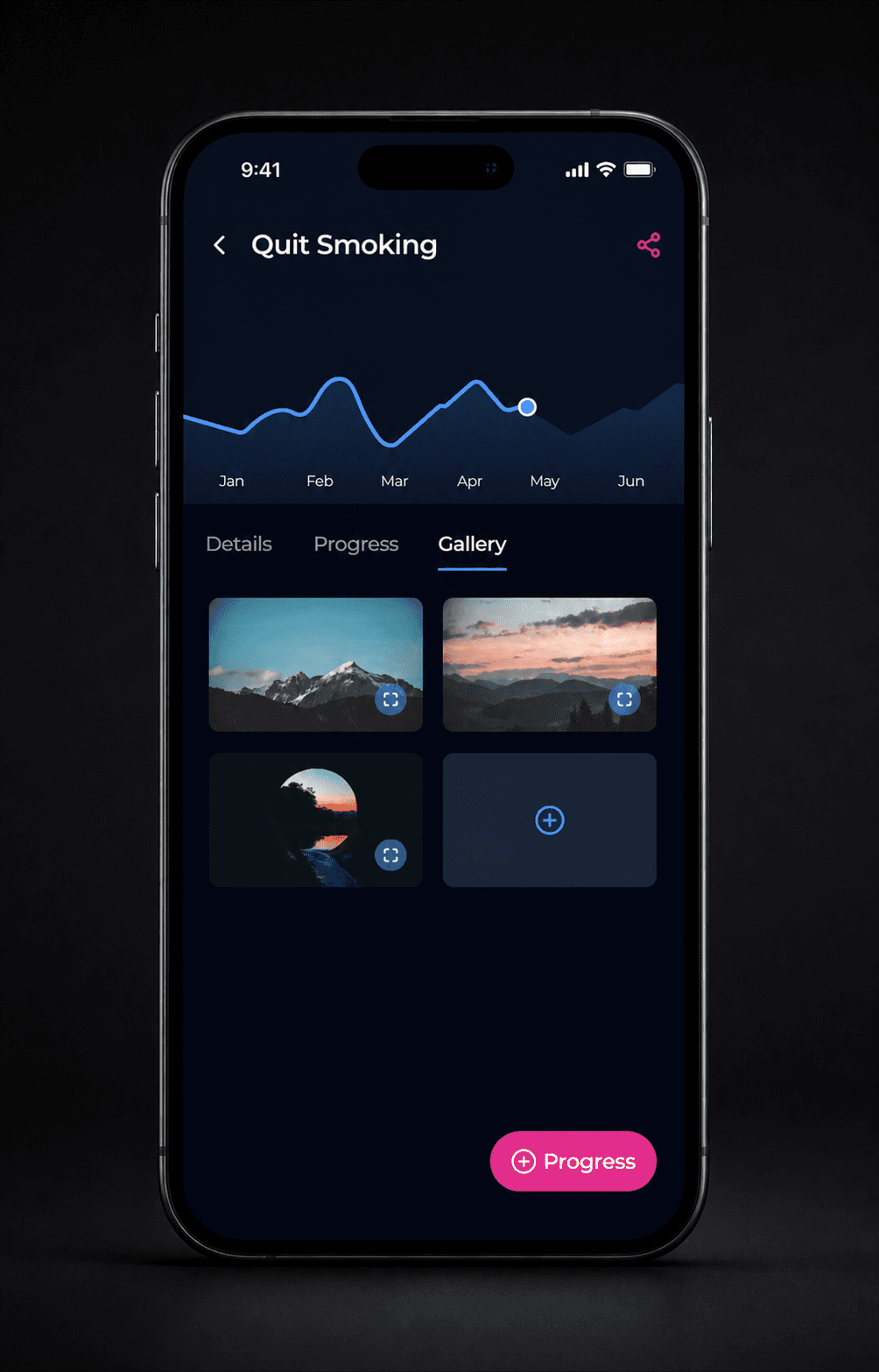
Priority Soft used the same information structure on the dashboard and detail screens. A familiar graph sits above tabs for the goal definition, progress history, and image gallery. Users can move between the plan and its evidence without losing track of the commitment.
Making check-ins fit the goal
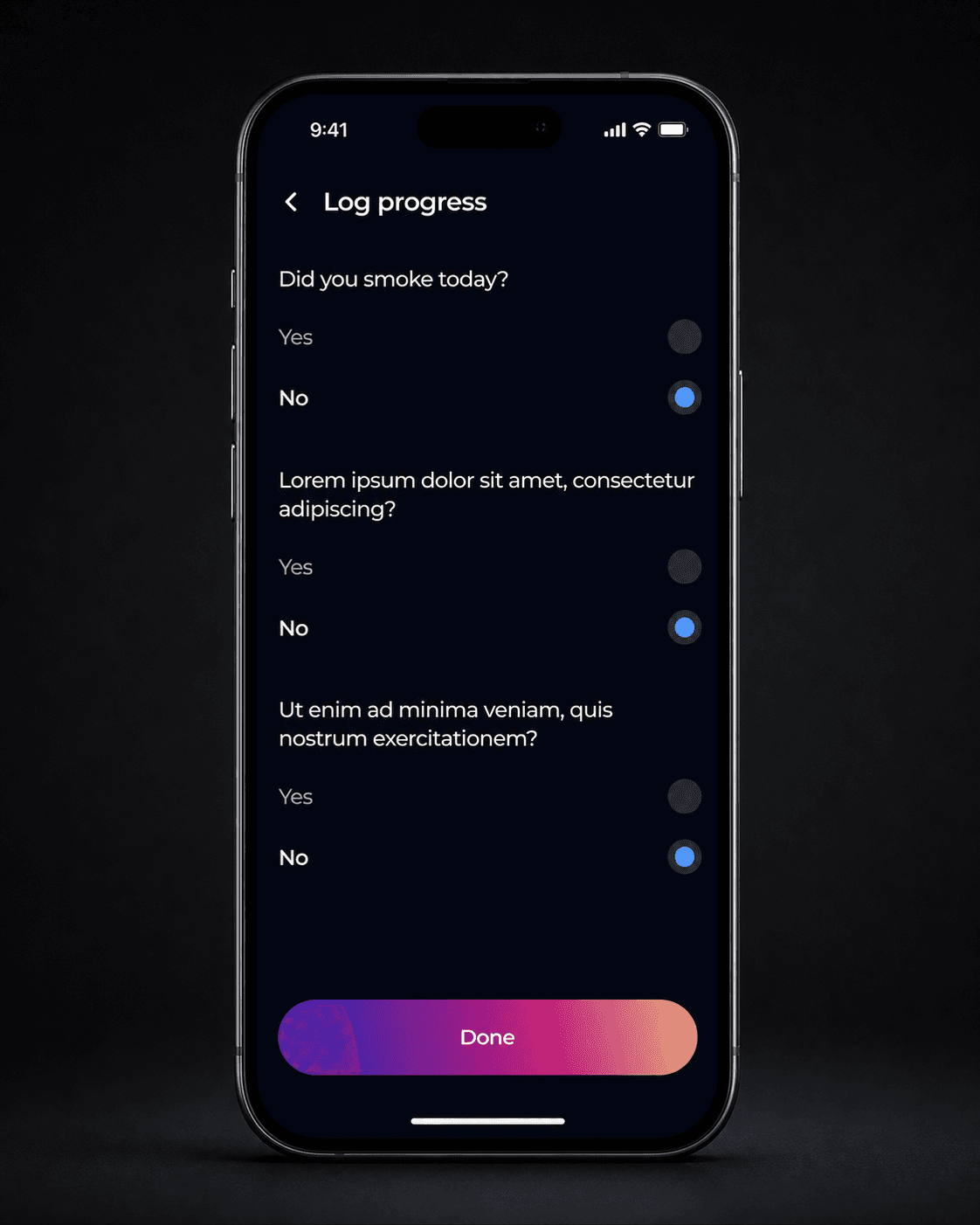
Users record progress through short, structured check-ins. The product asks questions related to the commitment. A behavior-change goal may use a yes-or-no response, while another may ask for a count, note, or supporting evidence.
The short interaction is easy to repeat and still produces useful data. The history records what the user reported on a given day and shows that entry within the wider goal.
We designed the history so an individual update can still be understood later. Entries are dated, readable, and tied to the current stage of the commitment. The progress view provides the pattern; the written record explains what happened at a specific point.
The image gallery gives users a place for photographs of the work, a result, or a moment connected to the goal. Those images stay with the commitment, where they form a visual record for longer goals. Photos remain optional at check-in.
Accountability that stays personal
An accountability partner can make a private intention harder to dismiss. Bank on It connects that person to the goal, so the user can see who is involved and share the relevant progress.
Priority Soft kept the partner role small. The user chooses the relationship, and the app keeps shared information attached to that goal. Two people can support one commitment without the mechanics of a general social network.
The person setting the goal controls the commitment. The partner sees enough context to understand the requested support. Neither person has to build an audience or maintain a public profile.
Accountability stays between the people involved. That suits the behavioral idea behind Bank on It and respects the personal nature of many goals.
Connecting the consequence to a cause
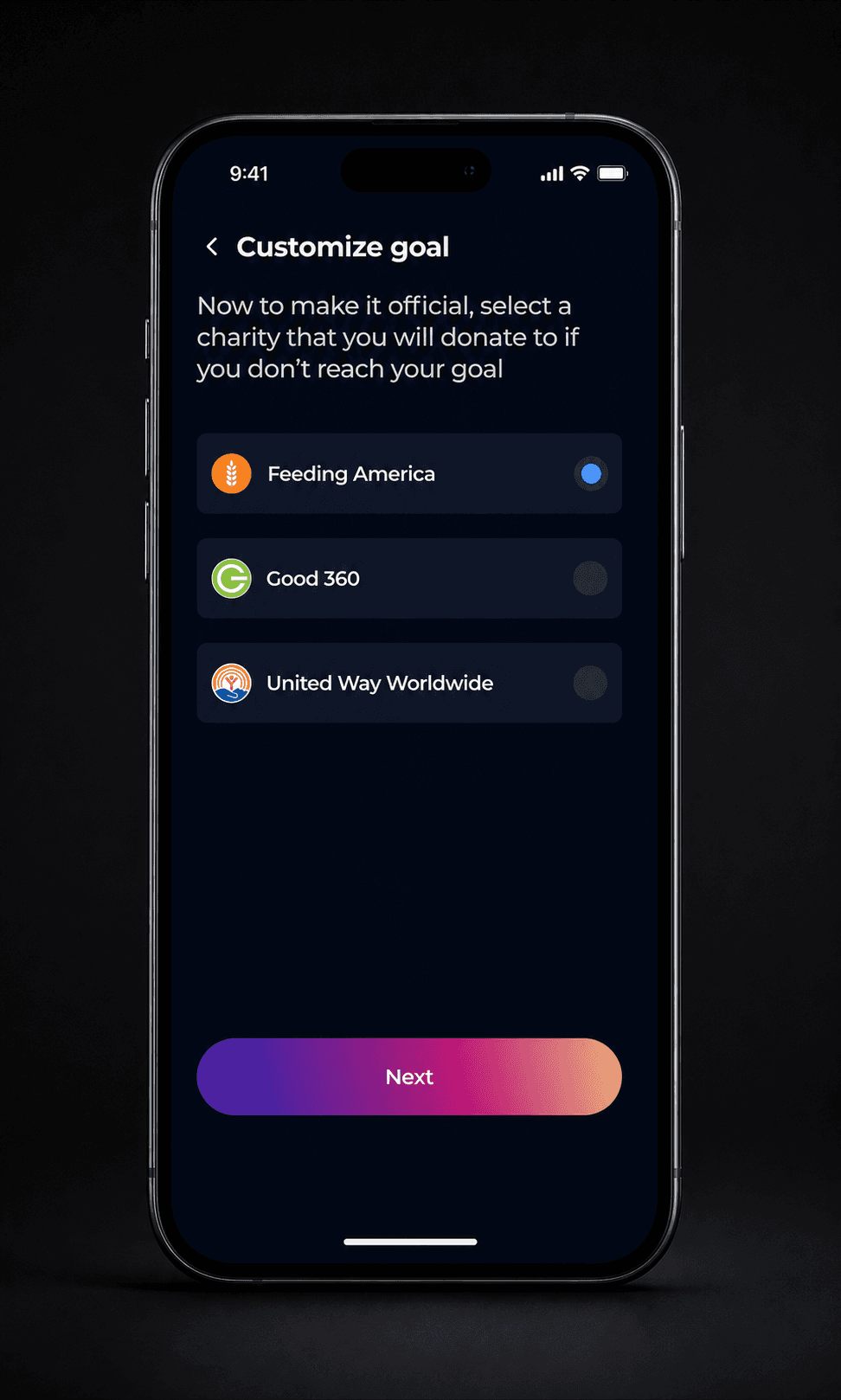
During setup, the user can select a charity for the goal. The interface explains that the chosen financial commitment applies if the user misses the goal. The user then confirms the decision before moving on.
Priority Soft gave charity selection its own step. The app presents organizations in a list, shows the selected option, and asks for confirmation. The goal detail screen keeps the cause beside the rest of the commitment information.
Payments can start, complete, fail, or require a refund. The app needs to explain the status of funds tied to each goal and outcome. We defined those states so users can see what happened without having to infer it.
Bank on It is a goal and accountability product with a payment component. It is not a bank, investment product, or savings account. This description matches the product that Priority Soft designed and handled.
Building for both mobile platforms
Bank on It uses Flutter and Dart for its shared iOS and Android app. BLoC-based state management separates interface behavior from the rules for goals, progress, partners, and payments. Each feature keeps its own responsibilities within a common foundation.
The technical structure follows the way a user experiences the application. Goal details remain connected to their check-ins and media. Partner relationships are attached to the relevant commitment. Payment activity can move through defined states without being mixed into the presentation of a progress chart.
Priority Soft included technical handover in the product work. We prepared the shared mobile foundation and documented the platform requirements, giving future engineers a codebase they could understand, build, and extend.
Priority Soft's role
Bank on It combines behavioral design with sensitive product mechanics. The interface has to encourage commitment without becoming judgmental. Progress needs to be honest without making a missed day feel like a dead end. Payment states need precision, while the surrounding product should still feel approachable.
Priority Soft shaped the setup flow, made different types of progress legible, and connected partners and charities to the right goal. We translated that model into a cross-platform app and documented the technical decisions for handover.
The strongest result is the continuity between screens. A decision made during goal creation appears where the user expects it later. A check-in changes the history and graph. An image becomes part of the record. The chosen partner and charity stay connected to the commitment they belong to.
The outcome
Bank on It became a focused mobile app for goals that need more than a reminder. Users can define a commitment, see several goals at a glance, record progress, add visual evidence, involve a trusted partner, and attach a charitable consequence to the outcome.
Priority Soft gave the concept a structure that supports motivation and responsibility. The goal stays at the center. Each supporting feature helps the user understand the commitment, current progress, partner involvement, or next step.