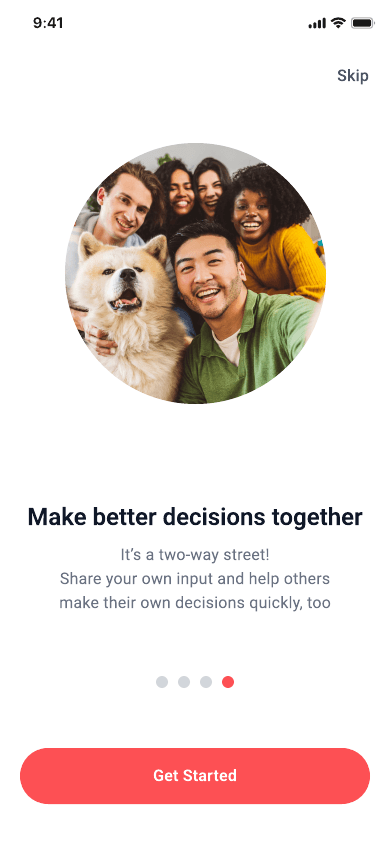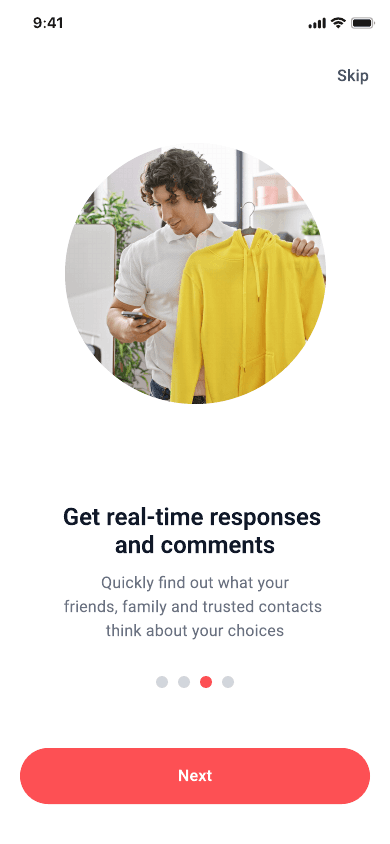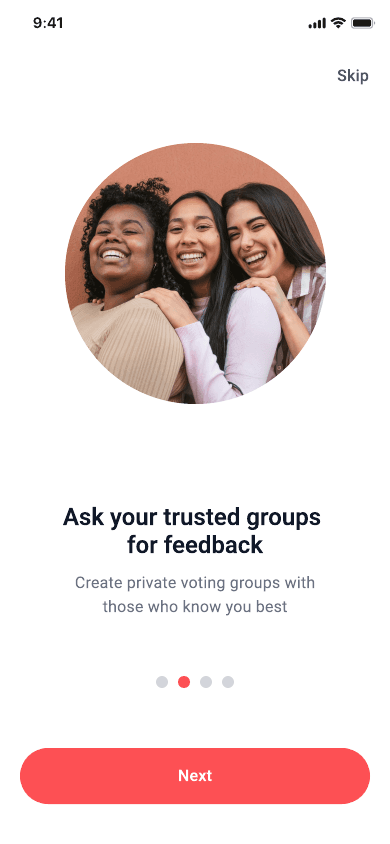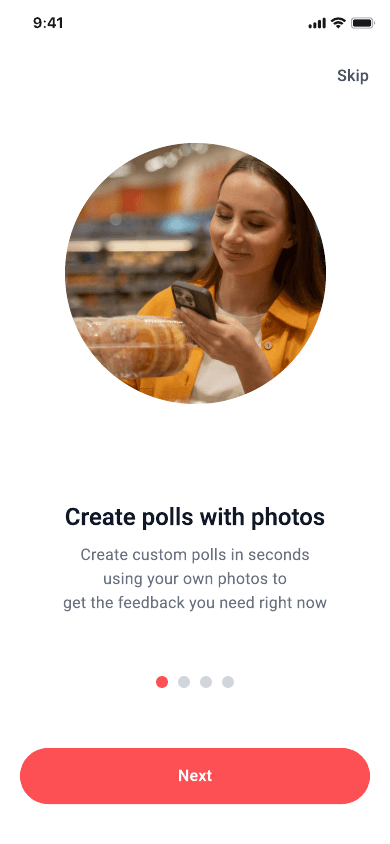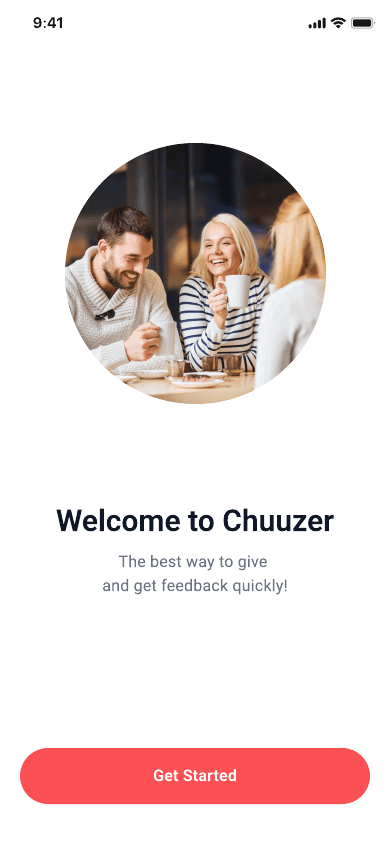
A faster way to ask the people whose opinion matters
Some decisions are easier with another opinion: an outfit, a design, a gift, a color, or an arrangement. Group chats can help, but images, replies, and unrelated conversation soon make the answer difficult to follow.
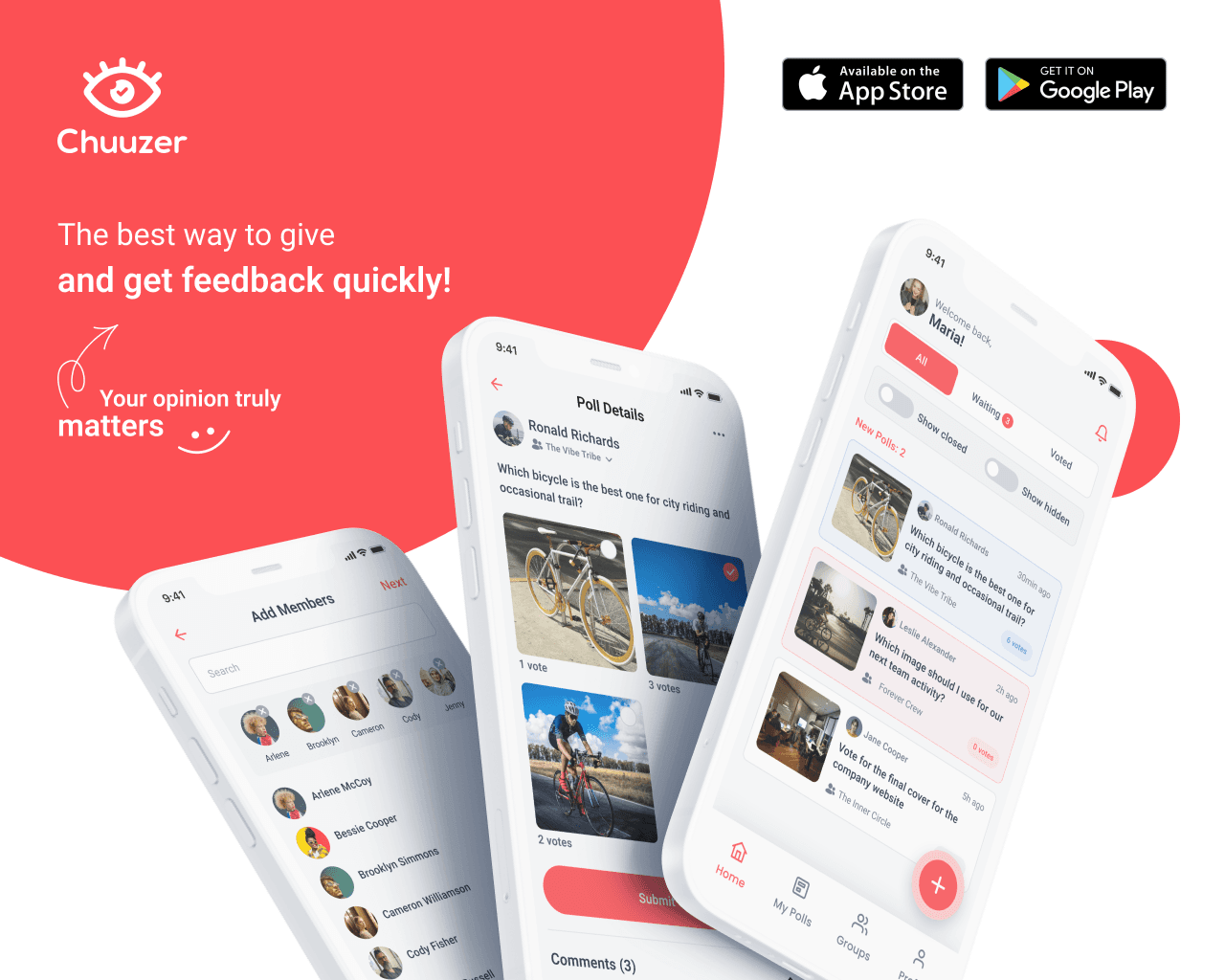
Chuuzer turns that familiar behavior into a focused mobile product. A user creates a visual poll from a small set of photos, sends it to a private group, and receives votes and comments from people they selected. The product is deliberately closer to asking trusted friends than posting to a public audience.
Priority Soft redesigned and rebuilt the experience around two promises: creating a poll should be quick, and the feedback should come from people the user knows. We worked across product strategy, brand, UX, mobile engineering, backend development, and safety to make those promises visible in every part of the app.
Private groups for trusted opinions
Chuuzer is not an open social network. Polls belong to private groups created by the user, and those groups define who can see and respond to them. This changes the tone of the entire product.
People can ask ordinary, personal questions without packaging them for strangers or chasing public engagement. A family group can be used differently from a group of colleagues or close friends. The user chooses the audience each time, so the context stays clear and the replies are more likely to be useful.
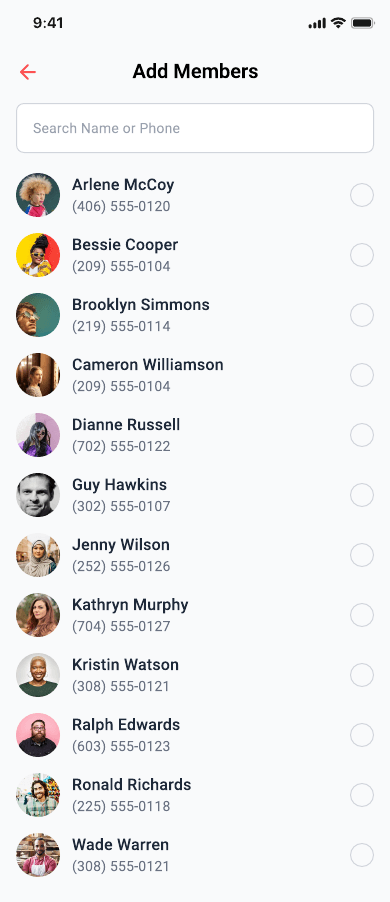
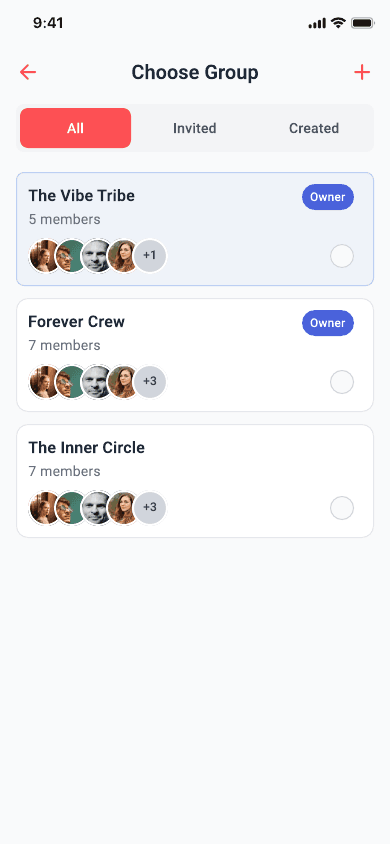
Groups sit at the center of the experience. Users can create one from their contacts, see who owns it, find contacts already using Chuuzer, and invite the rest. Filters separate groups the user created from groups they joined.
Each poll has a defined audience from the moment it is created, keeping opinions within the group the creator selected.
Building the poll around the moment of indecision
The best time to ask for feedback is often brief. A person may be standing in a shop, comparing two options in a room, or trying to make a choice before moving on. If creating the poll feels like filling out a form, they will return to the group chat they already use.
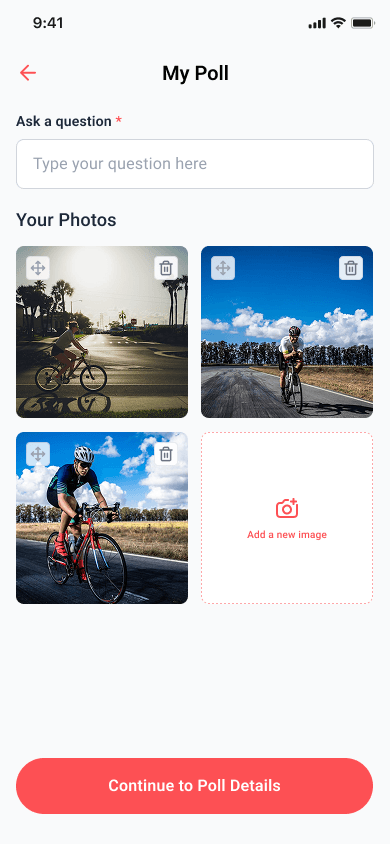
We redesigned poll creation to remove that friction. The user starts with a photo grid, adds a compact set of images from the camera or library, writes the question, selects a group, and reviews the poll before publishing. Optional captions remain available, but they no longer interrupt the main path.
The grid shows how many options are already present and makes room for another without requiring extra explanation. Images can be reordered directly. Group selection uses a touch-friendly sheet with recent choices close at hand, so repeat polls do not require the user to search through every group.
The creation flow removes unnecessary decisions, reduces visual noise, and keeps actions close to the content they change. Creators can still check the images and audience before sending.
A feed that answers "What needs me?"
Visual polls are simple individually, but an active user may belong to several groups and have a mix of new polls, completed votes, and their own open questions. The home experience needed to organize that activity without feeling like an endless social feed.
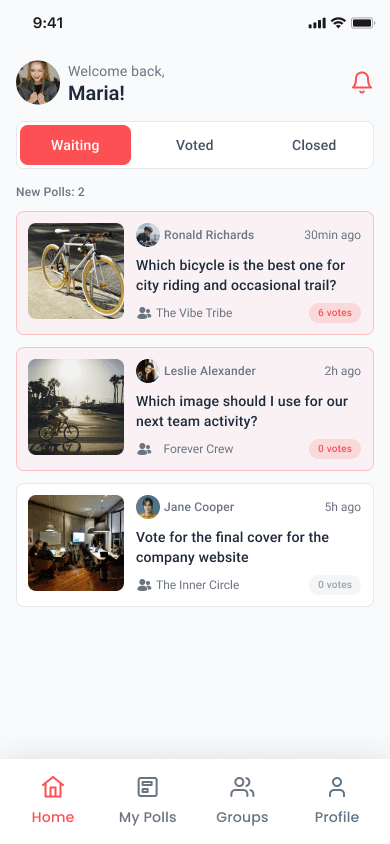
Chuuzer separates the feed into clear views for all activity, polls waiting for the user's response, and polls they have already voted on. A closed-poll filter keeps finished decisions available without allowing them to crowd the active experience. Visual states help users recognize their own polls and distinguish new activity from something they have already seen.
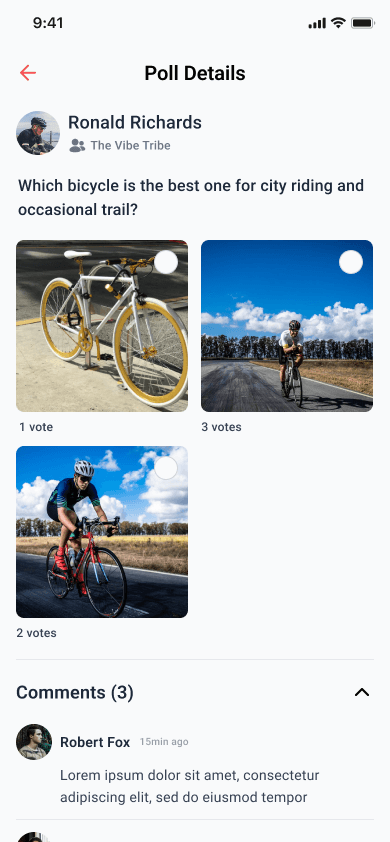
Each card gives enough information to decide what to do next. A user can open a poll, inspect the photos closely, vote, and join the discussion. Creators can review the result, close the poll, and choose a winning option when the group has had its say.
We kept the navigation shallow so a vote never feels far away. That matters because the product depends on response as much as creation. A beautifully designed poll is still a poor experience if the invited group cannot understand and answer it immediately.
Making images easy to compare
In Chuuzer, the photographs are the product content. They need to remain clear enough for a real comparison while loading quickly on a mobile connection.
Image selection, ordering, preview, and zoom form one continuous experience. Users can add photos from the camera or library, rearrange them before publishing, and inspect an option while voting. Controls remain present without covering the images.
The application also prepares images on the device before upload. That reduces unnecessary transfer while preserving a useful visual result. Cloud storage handles the media separately from the main product information, allowing the app to stay responsive as users create and browse photo-heavy polls.
These technical choices are mostly invisible, as they should be. Users experience them as a poll that is quick to create and comfortable to open, even when it contains several images.
Invitations that begin with trust
A private group product cannot grow unless invitations feel legitimate. A message from an unfamiliar service number gives the recipient little reason to tap, especially when the app is built around feedback between people who already know one another.
Invitations begin with the user's existing contacts. The recipient sees a message from someone recognizable, while the sender controls who is invited and what context accompanies the request.
Within the app, contact states make it clear who already uses Chuuzer and who still needs an invitation. This reduces guesswork during group creation and makes it easier to add another person later.
The decision connects product strategy with interface design. Invitations are not treated as a separate growth mechanism bolted onto the app. They are how a trusted group comes into existence, so the experience needs the same clarity and personal context as the polls that follow.
Safety as part of the core product
Private does not mean exempt from safety work. Any product that allows people to share images, comments, and invitations needs clear user controls and a practical way to respond when something goes wrong.
Reporting, blocking, account controls, and moderation are available where users may need them. They support a healthier private network without turning every normal interaction into a warning.
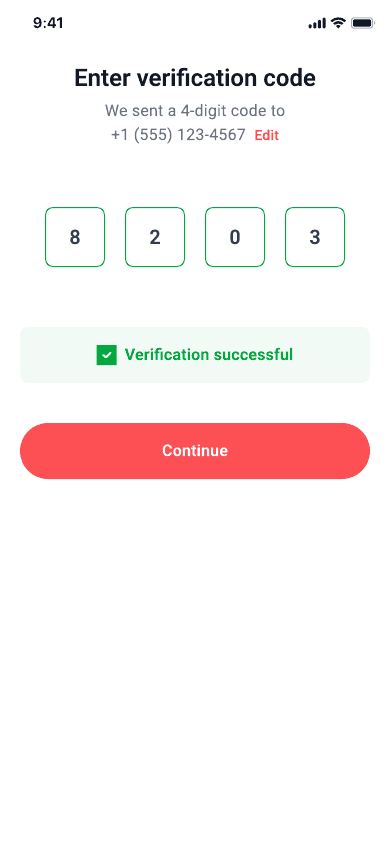
We also considered permissions as part of trust. Chuuzer explains why contact or photo access is useful and asks for it in context. Phone-based sign-in keeps the account model aligned with invitations while avoiding another password for the user to remember.
Users can see who has access to a poll, who belongs to a group, and how to handle unwanted content or contact. These controls help people share personal images within a known audience.
A new identity for a lightweight experience
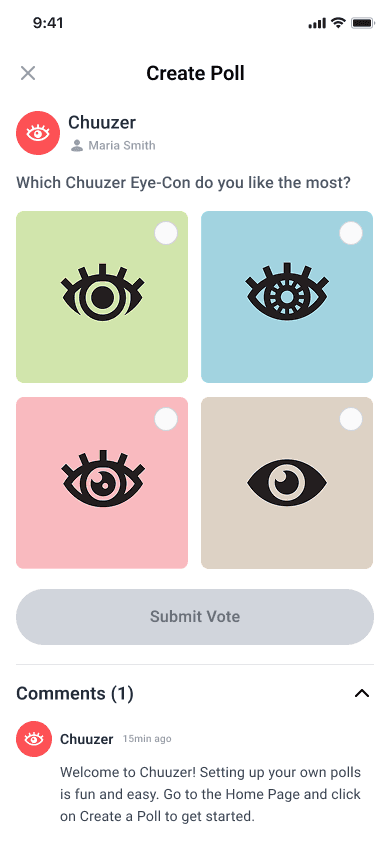
The redesigned Chuuzer needed a visual character that matched the product: direct, friendly, and easy to understand at a glance. Priority Soft created a new eye-and-checkmark mark that brings viewing and choosing into one simple symbol.
The interface uses a clean neutral base with a warm red-pink accent for the actions that matter. Typography is confident without feeling formal. Cards, filters, sheets, and image placeholders share the same visual rules, giving the application a recognizable rhythm without making it decorative.
We carried that system into practical mobile details. Selection controls are designed for touch. Layouts account for the keyboard instead of jumping when somebody types a question. Bottom sheets and dedicated screens replace awkward desktop-style dropdowns. Color helps with scanning but is never the only way to understand state.
The brand overhaul and product redesign happened together. Chuuzer does not wear a new logo over an old workflow; the visual identity, navigation, and interaction behavior all express the same focused idea.
A mobile foundation designed for the product
Chuuzer is built with React Native, Expo, and TypeScript for a consistent iOS and Android experience. The mobile architecture separates local interaction state from server-backed information such as polls, groups, comments, and votes. This keeps immediate interface behavior responsive while allowing shared activity to update reliably.
A Django service layer and PostgreSQL support the product model. Firebase services handle identity and notifications, while managed cloud storage supports poll images. The application compresses images before upload and uses secure device storage for sensitive session information.
The architecture follows the user's mental model. Polls belong to groups, options belong to polls, and votes and comments remain attached to the decision they concern. Navigation can open directly into the relevant invitation or activity, and notifications return the user to a specific reason for opening the app.
The implementation supports rich image interaction and shared activity without exposing that complexity to someone answering a simple question.
The outcome
Chuuzer now has a complete product language for quick, trusted feedback. Users can form private groups, create polished visual polls with little effort, vote and comment on the questions that need them, and keep finished decisions separate from current activity.
Priority Soft defined Chuuzer as a private social product, rebuilt its main interactions around speed and trust, added safety controls, and delivered the supporting mobile architecture. Users can ask the right people for an answer without involving the wider internet.