Making an invisible exposure easier to understand
Microplastics can enter everyday life through food, drink, packaging, household materials, and the surrounding environment. Research may describe those sources through different units, ranges, and assumptions, but that information is difficult for an ordinary person to connect to the choices they make during a normal day.
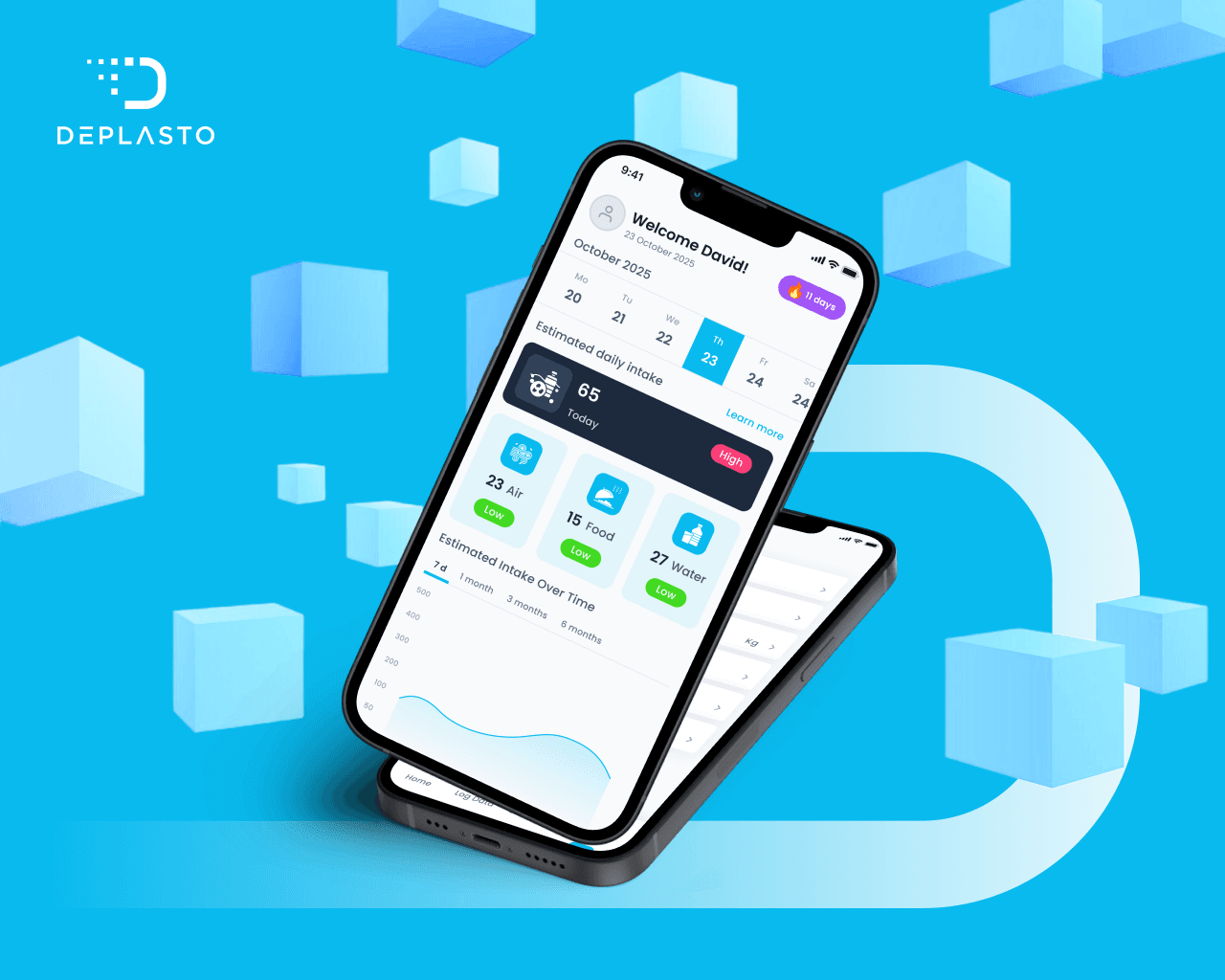
Deplasto turns the subject into a usable mobile experience. People can record common items and activities, see a directional estimate of exposure, understand which sources contribute most, and read practical educational material connected to what they log.
Priority Soft took the product from discovery and scientific-data planning through design, mobile and backend engineering, production preparation, and launch. We had to make uncertain research understandable, keep calculations consistent, and inform people without presenting an estimate as a medical measurement.
Designing an estimate that stays honest
The central product challenge was precision. A clean number can look authoritative even when it is based on ranges, study conditions, and assumptions that vary between sources. Deplasto needed to be useful without implying that a phone can measure the amount of microplastic inside a person's body.
The experience centers on directional exposure estimates. The product connects a user's entries to an active research dataset and calculation model, then shows how different categories contribute. It avoids diagnostic language and keeps education close to the numbers.
That distinction shaped both the interface and the technology. The dashboard explains the sources behind a total instead of presenting one unexplained score. Calculation rules are controlled centrally, which keeps the same entry consistent across devices and allows the model to improve as the supporting evidence changes.
Deplasto does not diagnose illness, determine personal body burden, or replace medical advice. Its purpose is to help people notice patterns in everyday behavior and explore the research behind them with more context.
Turning daily habits into a manageable log
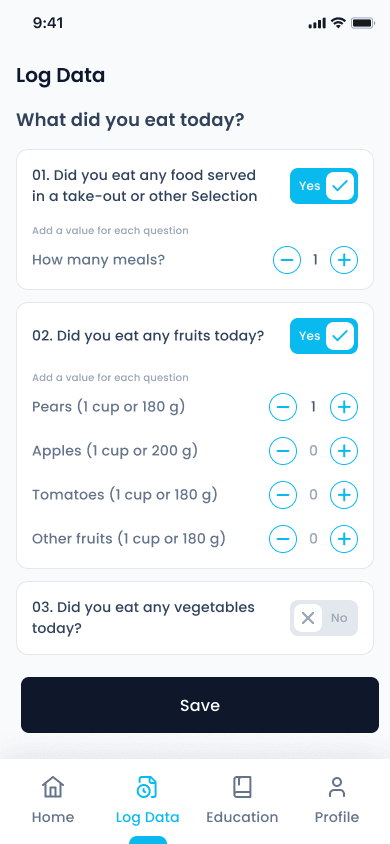
Tracking only works when the act of recording is easier than ignoring it. The range of possible exposure sources could have produced a long, technical questionnaire. Instead, Deplasto organizes logging around recognizable categories and items.
Users can browse or search for what they want to record, select the relevant item, and add the quantity or frequency information needed for an estimate. A single logging session can include several entries, making it practical to capture a meal, drink, or set of related activities without returning to the beginning each time.
The flow reveals detail when it is useful. Category navigation supports exploration, while search helps users who know what they need. Inputs are validated before they affect the dashboard, preventing accidental values from distorting a chart.
The log becomes a record of behavior rather than a form submitted into a black box. People can review what they entered and see how that item relates to the estimate shown elsewhere in the app.
A dashboard that explains the number
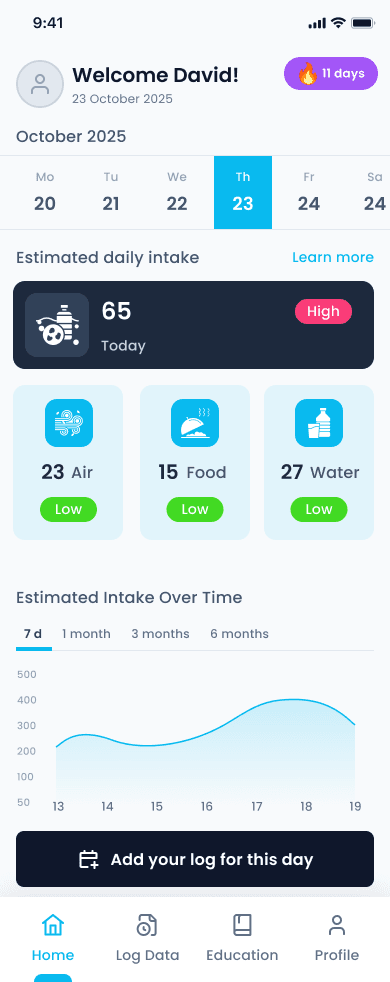
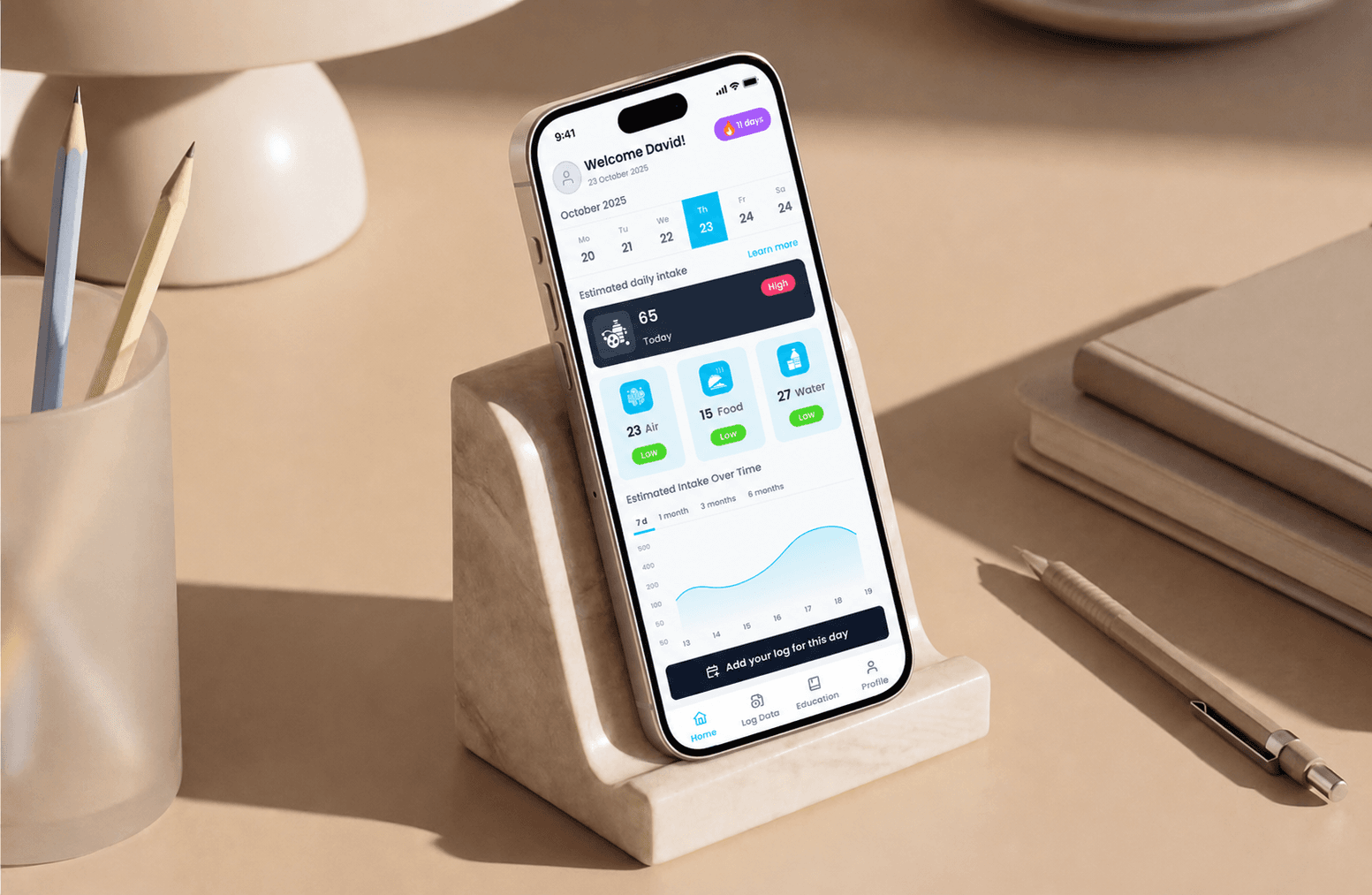
Deplasto's home screen gives users an immediate view of the day while preserving the ability to look across a longer period. Daily and weekly summaries show estimated exposure, changes over time, and the sources contributing most to the total.
Top sources help explain why one day differs from another. The product can show whether a pattern is associated with a particular category instead of leaving the user to guess.
Trend views support reflection without turning ordinary variation into an alarm. The charts are designed for comparison, not clinical interpretation. Longer views help users see repeated habits, while the current day remains available for quick orientation.
The dashboard, logging flow, and research dataset all use the same central calculation service. That keeps a result stable as the user moves through the app and prevents different mobile releases from applying conflicting formulas.
Education placed at the moment it matters
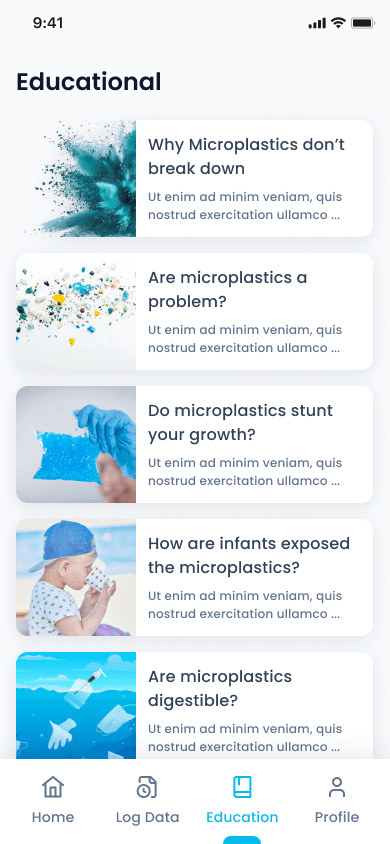
Exposure data without explanation can create confusion or unnecessary fear. Deplasto includes an educational library that introduces microplastics, common sources, and the context behind different categories.
Education connects directly to tracking. A user who sees a category contributing to an estimate can open relevant material. The content explains what the estimate can and cannot mean.
This relationship works in both directions. Someone may begin in the library, learn about a source they had not considered, and then recognize where it appears in daily behavior. Another person may begin with a logged item and use the supporting content to decide whether they want to change a habit.
The app remains informative rather than prescriptive. It gives users a way to explore evidence and patterns while leaving personal health decisions outside the product's claims.
A scientific dataset that can evolve
The evidence around microplastic exposure is not static. New studies appear, estimates are refined, and the product team may need to adjust the categories or assumptions used by the application. Hard-coding those values into the mobile app would make every improvement slow and difficult to trace.
Authorized team members can update the exposure catalog and calculation settings without rewriting the consumer experience. Versioned snapshots preserve the values used at a given point, while change records track updates.
This is important for product trust. If an estimate changes because the research model changed, the team should be able to understand that difference. The system keeps the active dataset usable for current calculations without erasing the operational history behind earlier versions.
The public product does not expose unpublished research material or internal decisions. Users see the categories, explanations, and estimates relevant to their experience, while the team retains the controls needed to maintain the underlying model responsibly.
Building the complete consumer experience
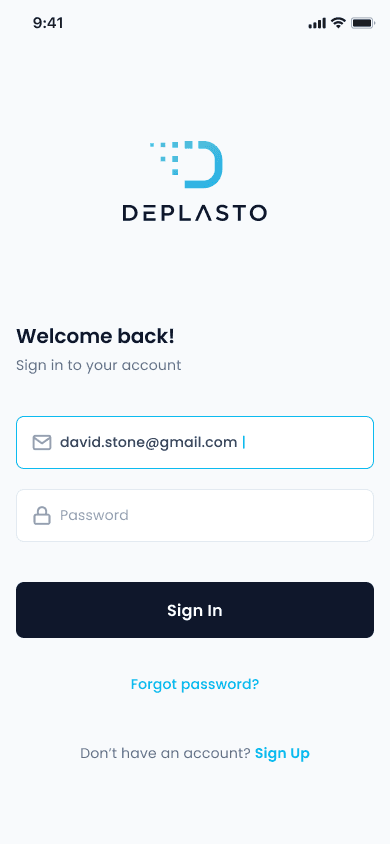
The central calculation could not stand alone. Priority Soft built guided onboarding, account access, profile setup, education, notifications, subscription handling, and referral functionality around the daily tracking loop.
Onboarding introduces the subject and establishes the limits of the estimate before asking the user to log anything. The home experience makes the next action clear. Profile and account screens give people control over their information, while subscription state is handled consistently across the mobile experience.
Referral features remain separate from scientific calculation. An invitation or reward can support product growth without changing a user's estimate or affecting how exposure is presented. The same separation applies to messaging and attribution: they support the application but do not become part of the model.
Separate test and production environments, version handling, and release workflows moved the app from internal builds to launch. Identity, subscriptions, data updates, and store distribution were tested together.
A mobile and data architecture with clear boundaries
Deplasto uses React Native, Expo, and TypeScript for its iOS and Android application. A Django service layer and PostgreSQL support the exposure catalog, user logs, calculations, summaries, and managed content. Firebase services provide identity and mobile messaging, while RevenueCat supports subscriptions.
The architecture keeps three concerns distinct. The mobile app focuses on input, explanation, and visualization. The service layer owns calculation and validation. The managed scientific dataset supplies the active values and categories used by those rules.
That division makes the product easier to maintain and safer to change. A revised source value can be introduced through the controlled data process. A calculation improvement can be made centrally. A new interface release can focus on usability without duplicating the scientific model on the device.
The system connects those layers through an exposure item, recorded event, daily summary, and source contribution. Users can see how their entries shape the estimate without understanding the internal machinery.
What Priority Soft brought to Deplasto
We defined what the application could responsibly say, then turned that boundary into a daily tracking experience.
Our team designed the logging and dashboard flows, built the mobile application and supporting services, created controlled operations for the evolving dataset, and carried the product through production release. Education, validation, account experience, and subscriptions were part of the product from the start.
The strongest decisions are visible in how the app explains itself. A total is connected to its sources. A trend is presented as an estimate. Educational content is available when a user encounters a category. Changes to the research model can be managed without hiding how the system arrived there.
The outcome
Deplasto launched as a consumer mobile product that connects everyday logging with understandable microplastic exposure estimates. Users can record habits, review daily and longer-term patterns, identify the sources contributing most, and explore education related to what they see.
Priority Soft gave the client a complete product and a responsible foundation for future research updates. Deplasto makes a complicated subject approachable without claiming certainty it cannot provide.