Field service software built for irrigation work
Most service management products assume that work can be placed neatly on a calendar. Agricultural irrigation rarely behaves that way. A pivot stops, a pump fails, or a crop is suddenly without water. The technician needs the right field location and equipment history now, not an appointment two weeks from now.
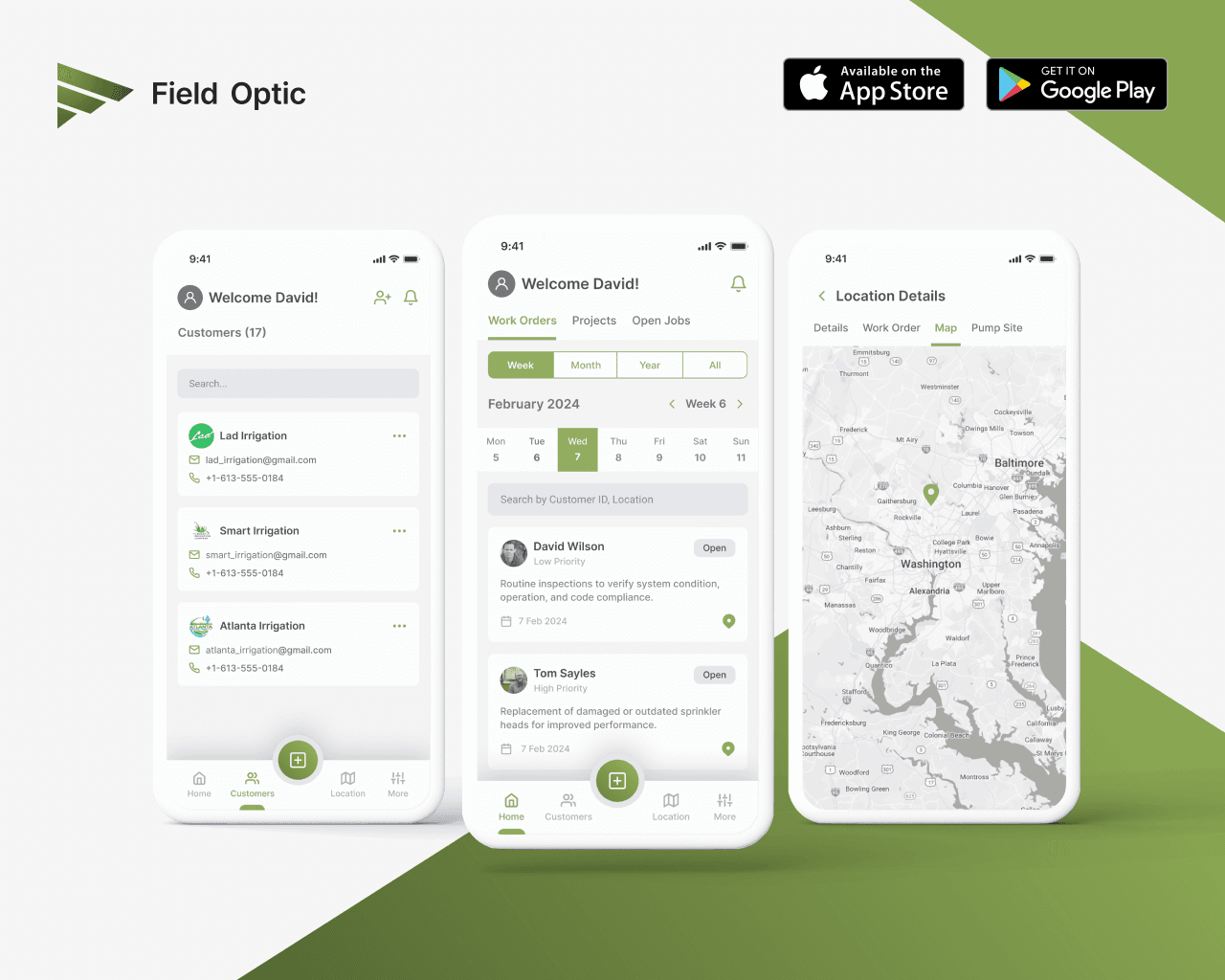
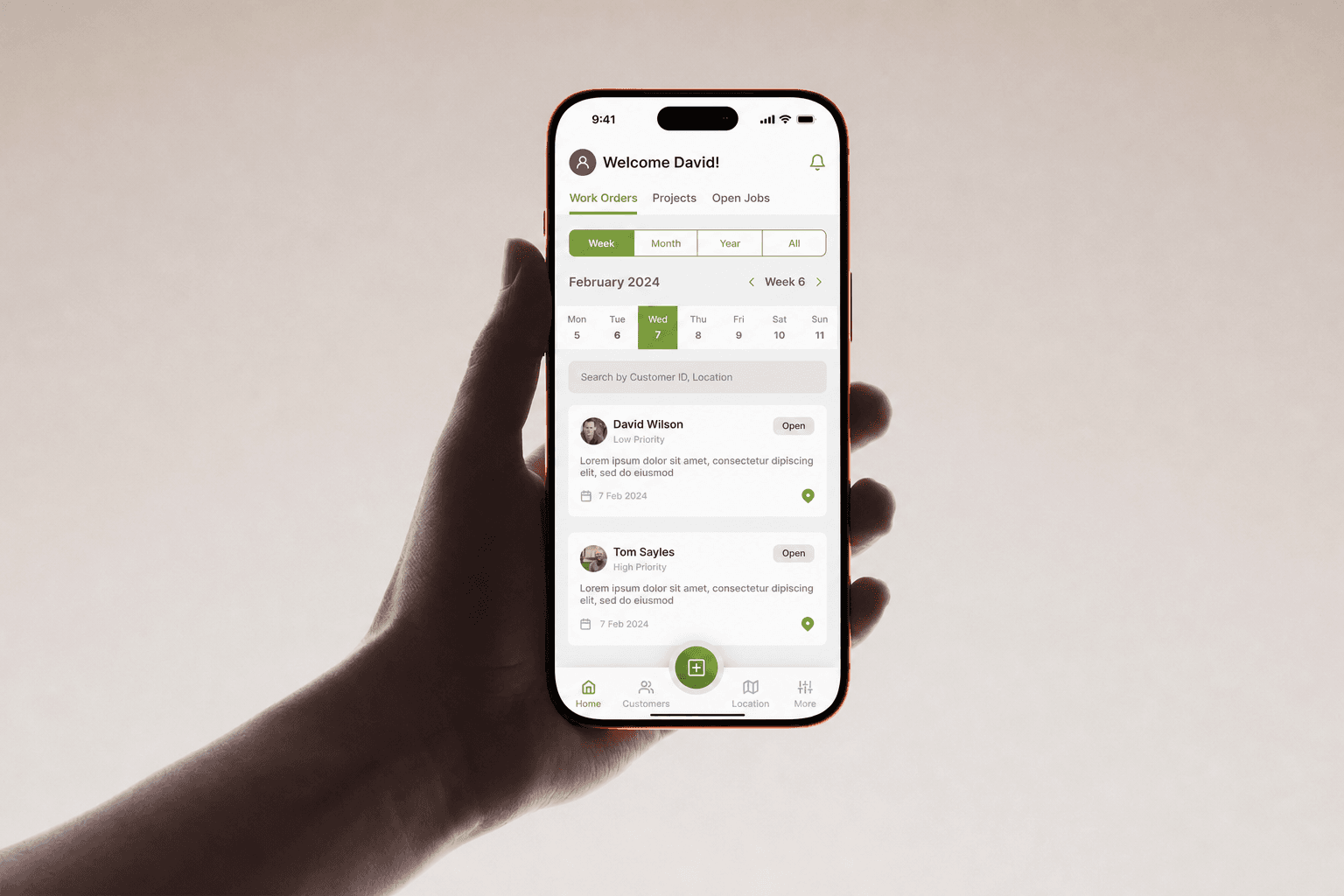
Field Optic is a mobile and web platform for the dealerships that install and maintain irrigation equipment. It replaces paper work orders with a shared record of customers, GPS based locations, service activity, parts, time, photographs, and completed work. Technicians use the mobile app in the field, while managers and office staff oversee the organization from a web portal.
Priority Soft turned the client's industry knowledge into mobile and web workflows for field conditions. We built the application and service layer, including mapping, roles, billing handoff, and field data.
Starting with reactive work
The most important product decision was recognizing that Field Optic is not a conventional scheduling app. Irrigation service teams respond to urgent calls, weather, parts availability, and the changing needs of a farm. The software has to capture what is happening without forcing every job into an artificial plan.
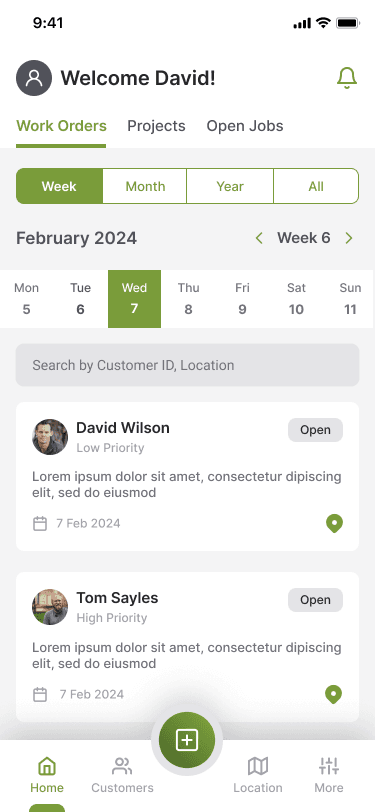
The mobile experience centers on active work orders and the information technicians need. Open, waiting, completed, and closed states distinguish jobs that need attention from those ready for the office.
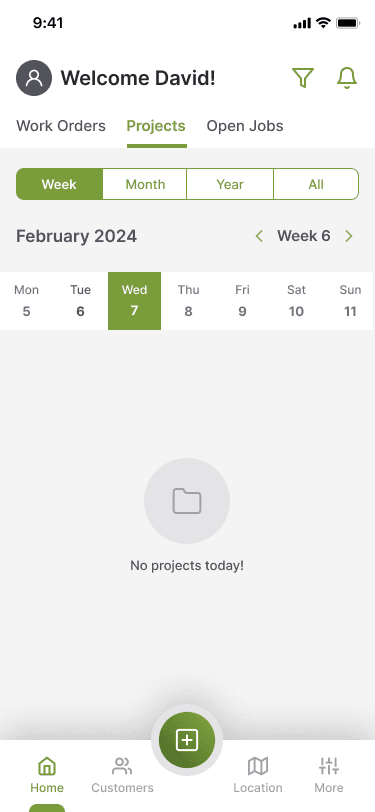
Projects remain available for larger planned work, but they do not define the whole application. A project can group several related work orders, while a reactive service call can stand on its own. This keeps the product flexible enough for both installation work and the unexpected repair that interrupts the day.
That distinction changed the information architecture, dashboard, status model, and way managers understand workload. Field Optic records how the service team works.
Finding equipment that has no street address
An irrigation site may be a center pivot or pump station in the middle of a field. A postal address can point to the farm entrance and still leave a technician miles from the equipment they need to repair.
Field Optic treats coordinates as a primary part of the location. Technicians can see customer sites on a map, recognize different equipment types through their pins, open the location record, and hand directions to Google Maps. A list view supports search and filtering when a map is not the fastest option.
Each map location connects to its customer, equipment details, previous work, notes, and installation information. Technicians arrive with context about the equipment and earlier work.
This GPS first model is one of the product's strongest pieces of domain fit. Field Optic does not try to squeeze remote agricultural assets into a residential address book. It gives each site the identity required for ongoing maintenance.
Building a work order from the field outward
A technician can create a work order by selecting the customer and location, describing the work, and adding the parts or services involved. Time, notes, and photos become part of the same record. The flow is designed to work on a phone while the technician is moving between a truck and the equipment.
Work-order creation uses short steps. Existing customer, location, and catalog information reduces repeated typing, while contact shortcuts let technicians call or email from the app.
Time can be recorded through a start and finish or entered manually when the situation calls for an adjustment. That flexibility respects an industry where travel, troubleshooting, and customer arrangements do not always fit a perfect timer.
Photos document the equipment and completed work. Notes preserve details that will matter to the next technician. Once the job is complete, the record can be exported as a professional document and passed into the dealership's existing office process.
A useful history for every customer and site
Paper work orders often answer the immediate billing question and then disappear into a cabinet. Field Optic turns each completed visit into a history that can help with the next one.
Customer records connect contacts, locations, and recent work. Location records bring equipment details and earlier service into view. A technician can understand whether a problem is new, recurring, or related to previous maintenance without calling the office to search for an old document.
The platform keeps customers, locations, work orders, and projects as related records. A customer identifies who is served, a location identifies the equipment, a work order records what happened, and a project groups related jobs.
That structure also makes the product useful to managers. They can review activity by customer, site, technician, status, or period without asking field staff to prepare separate reports. The information is already being created as part of completing the work.
Inventory as a practical field catalog
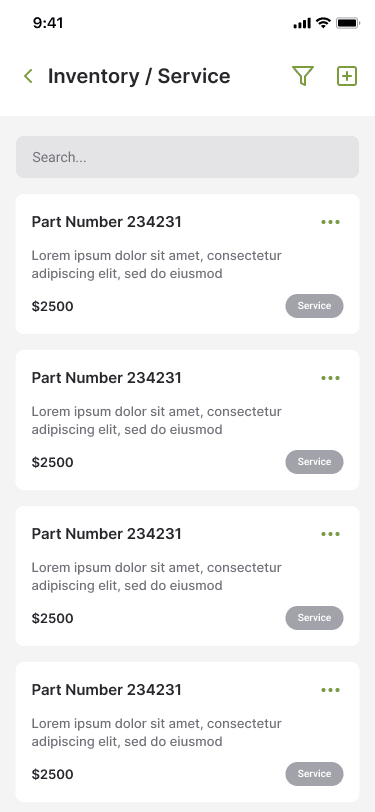
Field Optic includes parts and services, but it does not pretend every truck and warehouse is maintaining a perfect live stock count. For the initial product, inventory works as a reference catalog used to build accurate work-order line items.
Technicians can search by name, category, or part number and add the relevant item with its quantity. Services live in the same searchable experience, which makes the completed work order easier for the office to understand and process.
The platform records what was used on a job and provides shared reference data. It does not add a warehouse process that dealerships did not need.
Equipment reference material follows a similar pattern. Makes, models, and specifications can be available when useful without turning the mobile app into a dense technical manual.
Different tools for the field and the office
Technicians need a fast mobile application. The person setting up an organization, inviting employees, or managing account details is usually at a desk. Field Optic gives those jobs different interfaces while keeping them on the same platform.
The web portal handles organization setup, team invitations, roles, and account management. Administrators can add staff and decide who can manage the organization, coordinate service, work in the field, or handle completed jobs. Invited team members set up access and then use the mobile app for their day-to-day work.
The mobile app serves technicians in the field. The web portal handles purchasing and service administration for the dealership.
Role based access keeps each person focused on the information and actions appropriate to their work. Just as importantly, each dealership's customers, locations, and work orders remain separated from every other organization using the platform.
A clear handoff from service to office work
Completing the repair is not the end of a work order. The office still needs a readable record of time, parts, service, notes, and supporting photos before the job can move into its existing billing process.
Field Optic gives completed work a distinct place for office review. Staff can see what is ready, open the full record, and export a document that carries the service details forward. The platform supports that handoff without attempting to replace every accounting system used by a dealership.
The field team records the work once, and the office receives a consistent package without reassembling paper, text messages, and photographs. The dealership can continue using its chosen financial tools after Field Optic hands off the service record.
Technicians spend less time explaining completed work, and office staff receive a record they can act on.
Technology chosen for relational field data
Field Optic uses Flutter for a shared iOS and Android application. A Django service layer and PostgreSQL support the web portal, identity, organizations, customers, GPS locations, work orders, projects, and the parts and services catalog. Mapping services provide location display and directions, while secure cloud storage holds work-order media and generated documents.
The relational foundation suits the product. A dealership has many customers; each customer may have several remote sites; each site develops its own service history. Work orders bring those relationships together and add the technician, parts, time, and status for a particular visit.
Organization boundaries sit in the service layer. Product data is scoped to the dealership whose team created it, and role checks control administrative actions.
What Priority Soft brought to Field Optic
Priority Soft's role was to listen closely to the domain and resist assumptions borrowed from residential field service. We understood why reactive work matters, why GPS coordinates can be more useful than an address, why time entry needs flexibility, and why a reference catalog can be better than premature stock management.
We turned those decisions into connected mobile and web products. The map leads to the location history. The work order uses shared customer and catalog information. Completion creates something the office can use. Roles reflect the people inside a dealership rather than generic user levels.
This is where specialist software earns its place. Field Optic feels specific because the design and architecture preserve the details that make irrigation service different, while keeping the everyday interface straightforward for a technician in the field.
The outcome
Field Optic gained a substantial service management platform built around agricultural irrigation. Dealerships can organize customers and remote equipment sites, give technicians the context needed for a call, record work in the field, and move completed jobs toward office processing through one shared system.
Priority Soft transformed years of industry knowledge into software that follows the service workflow. Field Optic replaces scattered paper and messages with one operating record, without forcing irrigation teams into a generic scheduling model.